
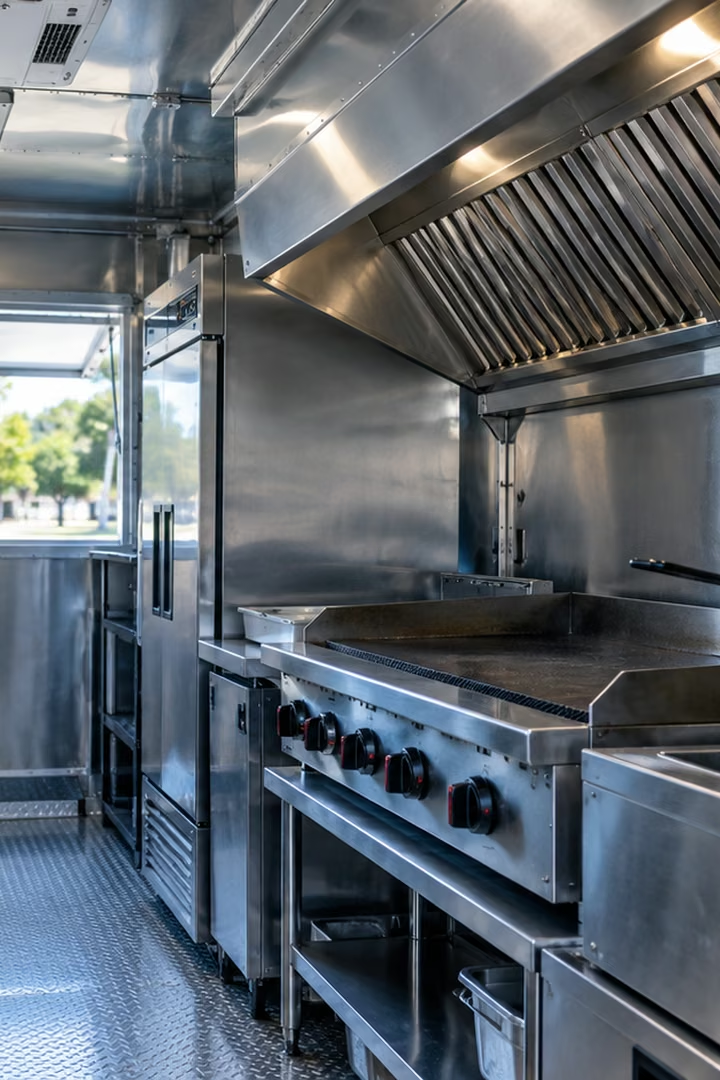
Mobile kitchens still have a grease path.
A food truck or trailer using grease-producing cooking equipment may have a canopy, filters, plenum, duct and exhaust fan in a compact arrangement. Small dimensions do not prove that the system is clean or that every component can be reached easily. Identify the installed cooking and exhaust equipment before agreeing on the work.
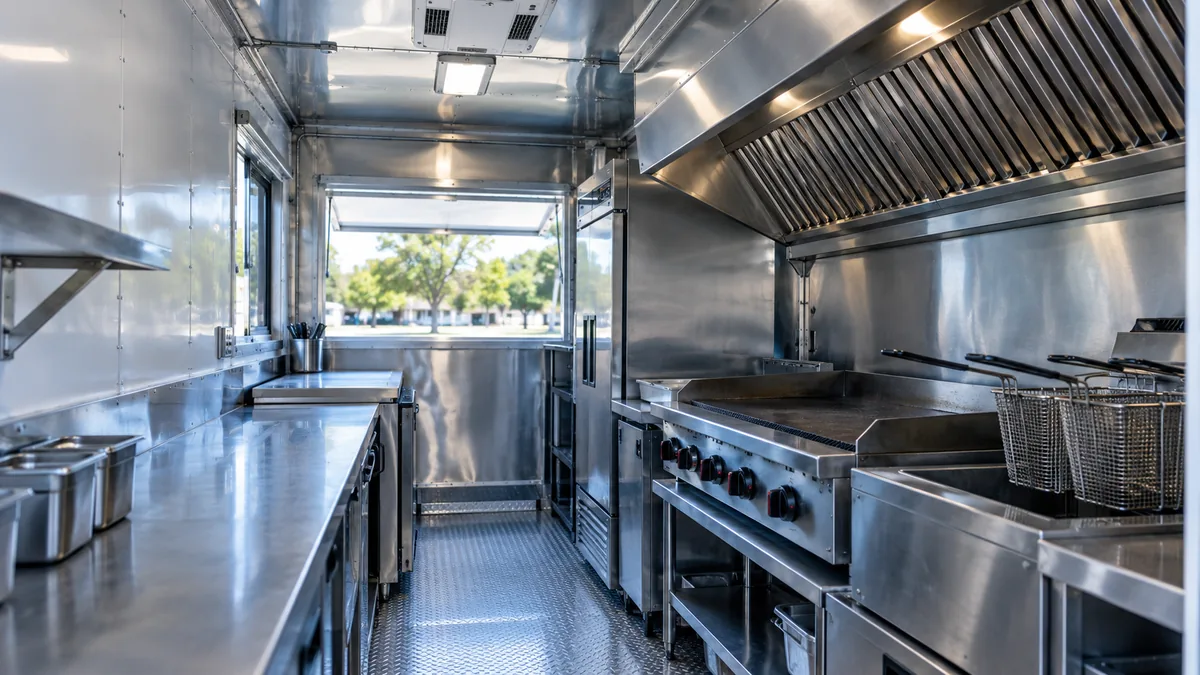
Do not confuse a grease hood with every roof vent.
A mobile unit may have several ventilation openings serving different purposes. This scope concerns the commercial cooking-exhaust system, not vehicle engine exhaust, bathroom ventilation, general HVAC or residential range-hood care. Equipment used only to warm or serve food needs a different assessment from a cookline using fryers or griddles.
Agree on a suitable service location.
Provide the location where the unit will actually be available, not only the event route or business mailing address. Explain parking restrictions, equipment access and any requirements at the commissary or property. Review suitable working space and site arrangements before booking. Cleaning at every event site or roadside stop should not be assumed to be available.
Compact equipment needs system-specific planning.
Fan placement, short duct runs and tightly packed equipment can change how components are accessed and protected. Follow manufacturer instructions and disclose any existing damage or past access limitations. Do not remove equipment, disconnect electrical or fuel components, or climb onto the unit solely to collect quote photographs.
Your operating pattern matters more than truck size.
A unit cooking intensively at several events can have a different grease load from one with infrequent service. Explain hours, cooking methods and changes to the menu. Keep inspection and cleaning decisions tied to system condition and applicable authority requirements. A clean exterior and a recently washed filter do not establish the condition of the hidden exhaust path.
Keep records for the correct unit.
Ask how the report identifies the vehicle or trailer, cooking system and components documented. Keep completion information, photographs and recorded deficiencies with the unit’s maintenance records. Hood cleaning is not vehicle inspection, suppression-system service or a guarantee of event approval.
Start a mobile kitchen quote.
Share the hood count, service-location address, unit details and any safely obtained photographs or plans. Confirm mobile-unit compatibility and availability before booking. See filter care and grease-duct cleaning for the connected components, or read the food-truck maintenance guide for planning questions.
Useful Utah references
The Utah State Fire Marshal commercial-kitchen guidance explains grease contamination and service records. Review the kitchen-exhaust licensing and personnel requirements and confirm the requirements applied to your facility with the responsible authority.
Prepare a mobile-kitchen request
- Trailer or truck cooking equipment and hood count
- The stationary service location and access around the vehicle
- The actual duct route and roof-mounted exhaust arrangement
- The commissary or operator contact coordinating the visit
Ready to discuss your kitchen?
Share the hood count, service address and any known access requirements.