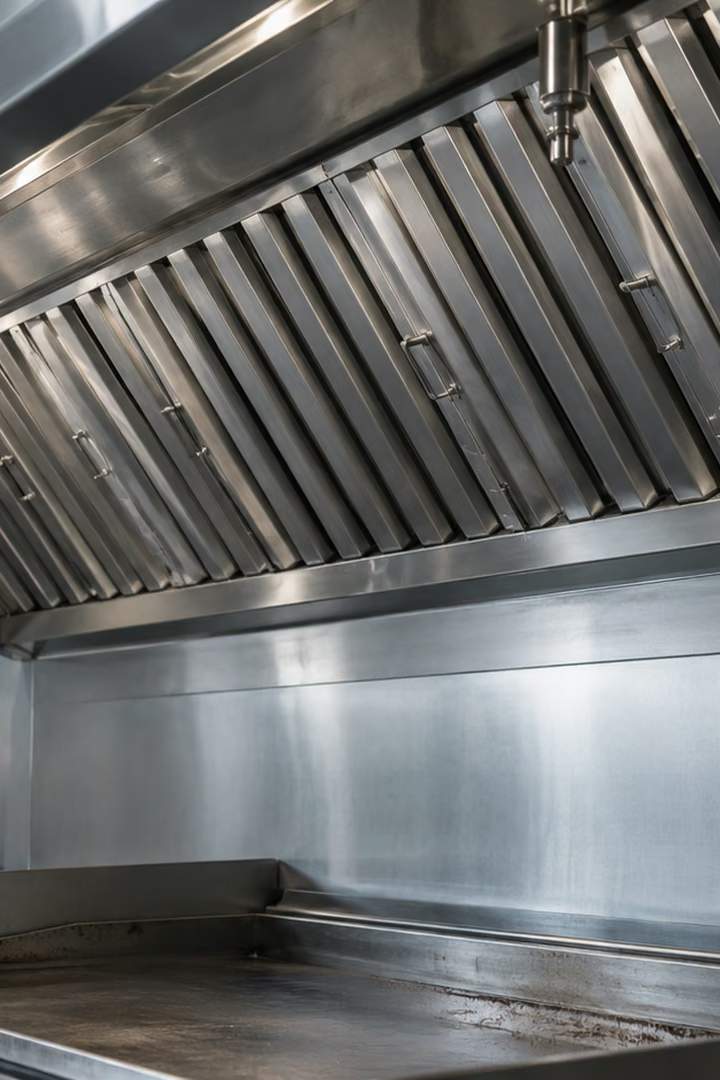
What is inside the hood assembly?
The visible canopy, the internal plenum and the grease filters have different roles. Cooking residues may accumulate beyond the exterior stainless surface. The cleaning conversation should identify these areas rather than concentrating only on the shine you can see.
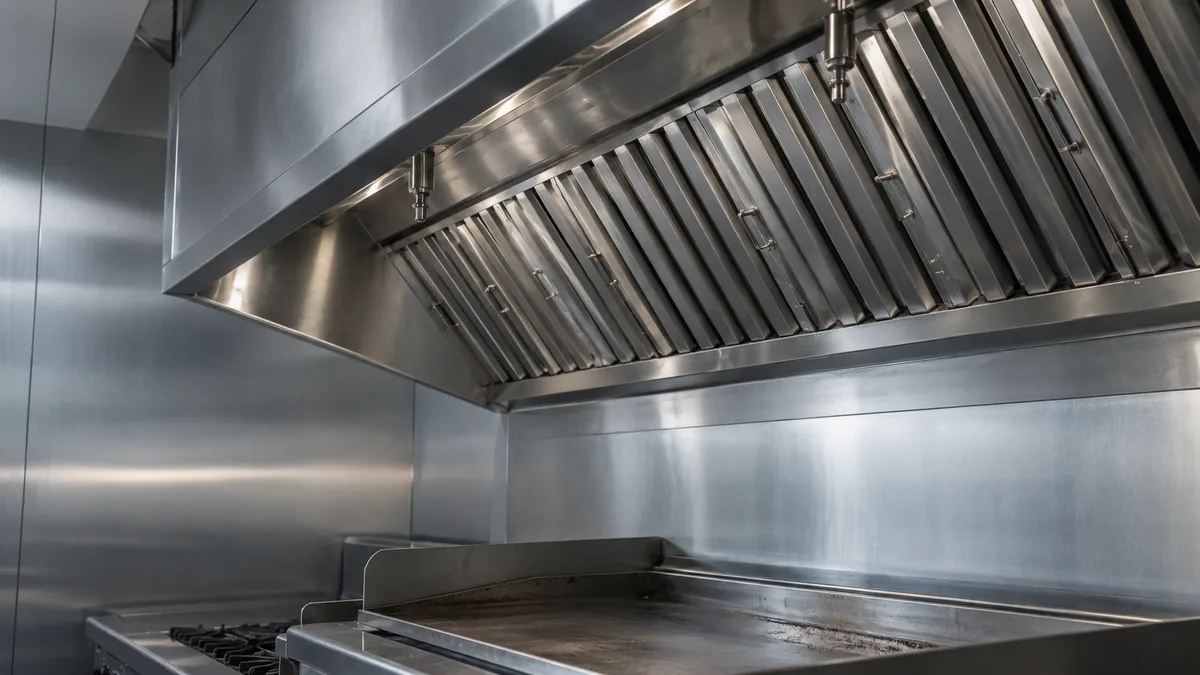
The canopy is not the whole exhaust path
- Exterior canopy surfaces and the accessible hood interior
- Baffle filters and the surrounding plenum
- The transition into grease ductwork
- The fan serving the cooking line, if included in the agreed scope
A hood-only wipe is not whole-system cleaning.
Make the requested scope explicit. If ductwork and the exhaust fan are part of the service, they should be identified in the quote and record. For a wider system discussion, see our commercial kitchen exhaust cleaning page.
Make preparation straightforward.
Before service, discuss equipment protection, working space and how the cooking line will be made available. Inform the service team about known damage, previous deficiencies and building-access requirements.
Understand the result.
A useful report identifies the work performed and any limitations. Keep it available for your maintenance records. Cleaning the hood does not by itself establish that every part of the kitchen installation meets all applicable requirements.
Bring the cooking line into the conversation.
Explain whether the hood covers a fryer, griddle, charbroiler or several appliances. Include the hood count and any differences between cooking stations. Several canopies in one building do not necessarily share a single duct or fan, so identify the systems rather than describing the kitchen as one unit.
Share existing records or safely obtained photographs when useful. Photographs can help start a discussion, but they cannot establish the condition of concealed ductwork or replace a site-specific scope assessment.
Keep the related components in view.
Explore whole-system exhaust cleaning when planning the connected exhaust scope. Ask which parts of the system are included, which may need separate arrangements and how those limits will be recorded.
Before you book
- Describe the operation. Share the service address, hood count and cooking equipment.
- Agree the access. Explain locked areas, roof entry and the available service window.
- Confirm the record. Ask what photographs, limitations and follow-up information will be supplied.
Ready to discuss your kitchen?
Share the hood count, service address and any known access requirements.