
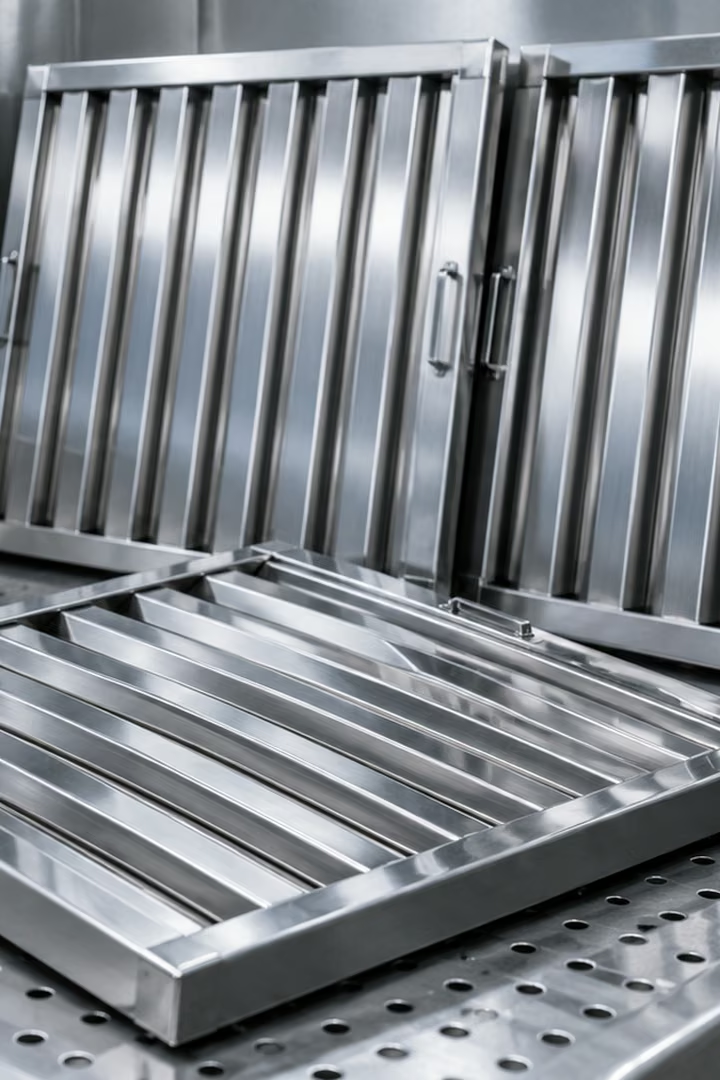
Filters are one part of a connected system.
Grease filters help collect cooking residues before exhaust moves into the ductwork. A clogged or damaged filter can affect the way the hood operates. Filters should be assessed alongside the hood, plenum and rest of the exhaust system.
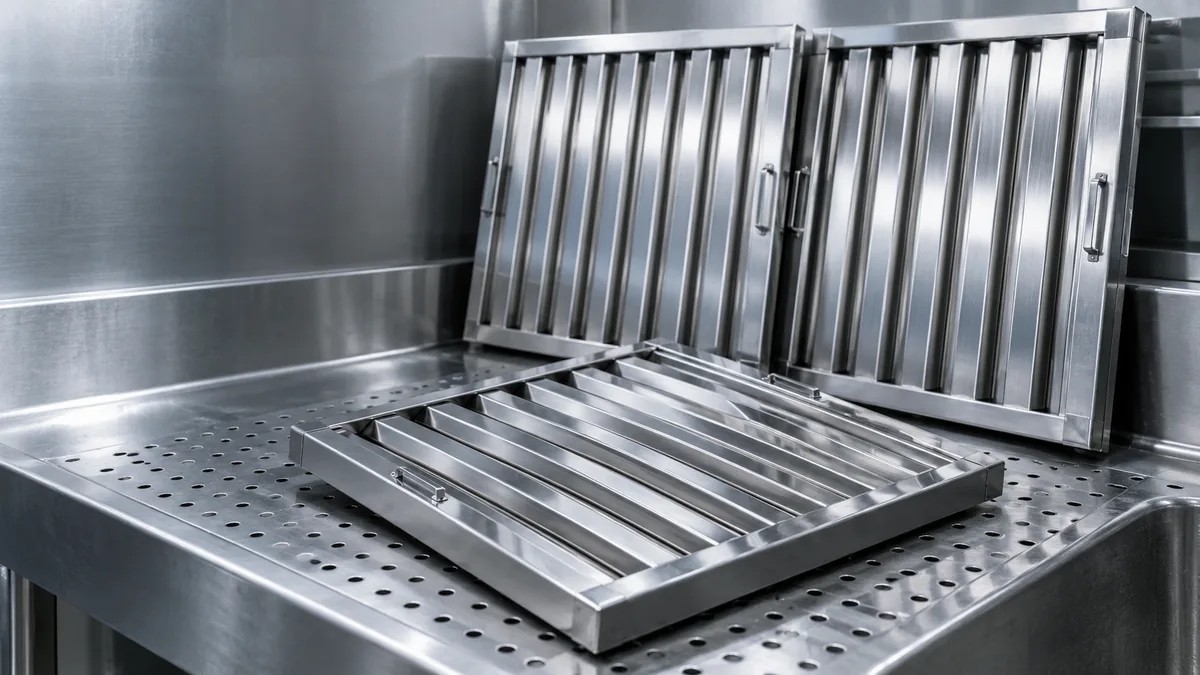
Useful details about the filter bank
- Filter type, dimensions and the number of panels
- Damaged, missing or loose-fitting filters already noticed by the kitchen team
- The existing routine-care method and manufacturer instructions
- Whether replacement parts require a separate quote
Routine care and professional exhaust service are different.
Kitchen teams should follow the equipment manufacturer's instructions for permitted routine filter care. That work does not replace inspection and cleaning of the ductwork and fan by an appropriately qualified provider.
Condition and fit deserve a closer look.
Missing, damaged or incorrectly installed filters should be discussed and recorded. Ask whether any replacement is needed and whether it is included in the quoted work. Do not assume a cleaning visit includes replacement parts.
Build filter care into the maintenance conversation.
Explain the type of cooking, the amount of use and the current filter-care routine when you request a quote. The right discussion covers both everyday kitchen housekeeping and scheduled exhaust-system service.
Make routine care easier to distinguish from the service visit.
Ask which filter-care tasks the kitchen team may carry out under the equipment instructions and which work belongs with the exhaust provider. Keep the everyday routine and the wider hood, duct and fan service record together so a recently cleaned filter is not mistaken for proof that hidden system components are clean.
Do not remove or substitute filter components simply to improve airflow. If a panel is damaged or does not fit, explain that condition to the appropriate provider and confirm the replacement specification before approving additional work.
Keep the related components in view.
Explore hood and plenum cleaning when planning the connected exhaust scope. Ask which parts of the system are included, which may need separate arrangements and how those limits will be recorded.
Before you book
- Describe the operation. Share the service address, hood count and cooking equipment.
- Agree the access. Explain locked areas, roof entry and the available service window.
- Confirm the record. Ask what photographs, limitations and follow-up information will be supplied.
Ready to discuss your kitchen?
Share the hood count, service address and any known access requirements.