
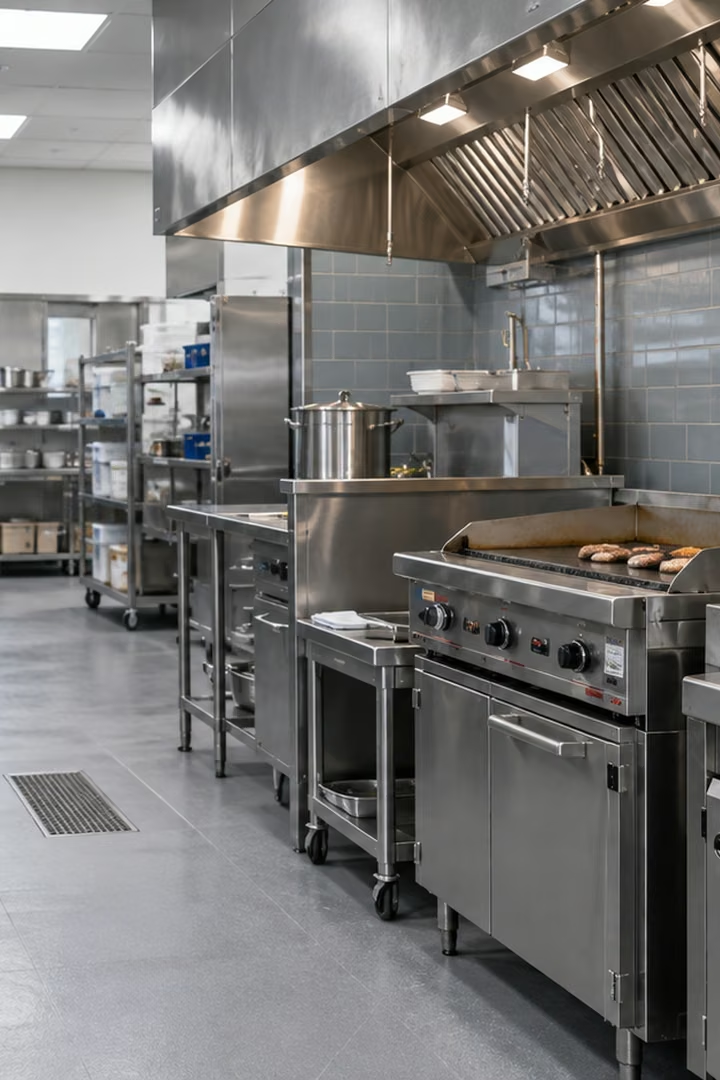
Separate dietary kitchens from clinical ventilation.
Hospitals, assisted-living communities and other care facilities can have full production kitchens, smaller serving kitchens or a combination. Start with the cooking equipment and the exhaust system serving it. This scope is grease removal from commercial cooking exhaust, not medical ventilation, isolation-room airflow, infection-control certification or cleaning the entire healthcare facility.
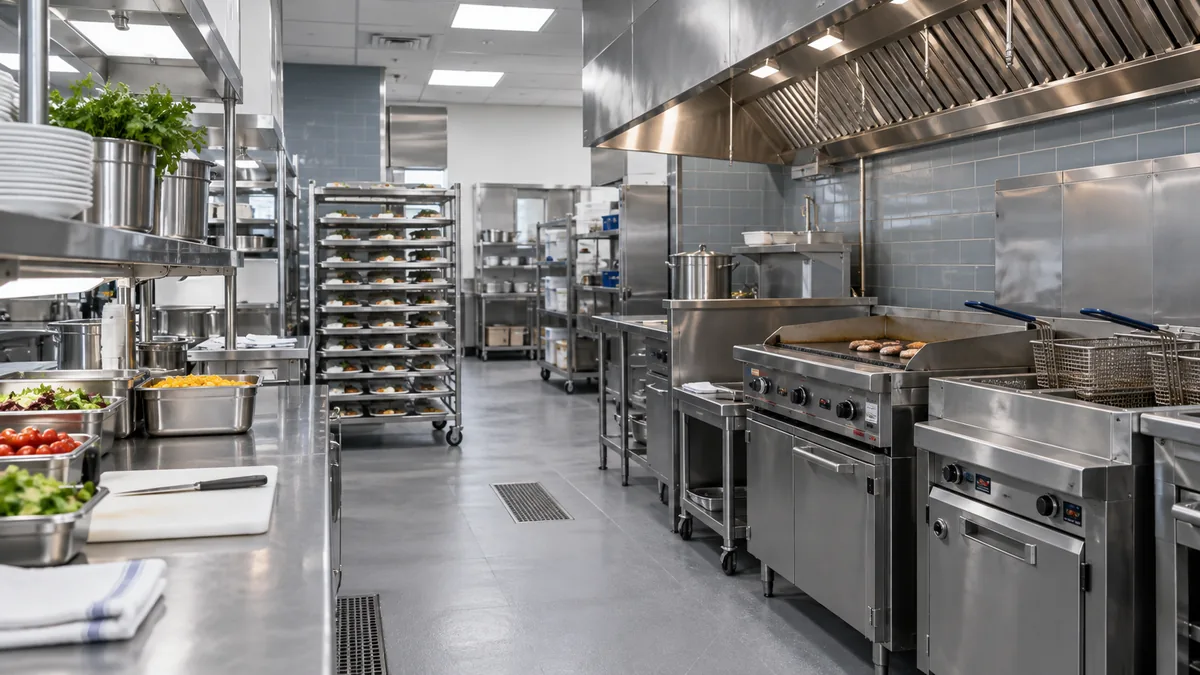
Know which kitchens actually produce grease.
A central dietary kitchen operating fryers or griddles may need a different service conversation from a resident-serving area used mainly for reheating. Identify hood type, cooking methods, operating hours and known grease accumulation. Do not apply the same interval to every care-facility kitchen simply because the buildings share an owner or license category.
Plan around meal production and site requirements.
Tell the service team when the cooking line can be taken out of use and whether another kitchen must continue operating. Facilities staff may control plant rooms, roof access or contractor entry. Include applicable site procedures, escorts and required contractor documents when requesting a quote. These requirements should be reviewed before a service time is agreed; special access or credentials are not automatic.
Follow the exhaust route through the building.
A kitchen located away from the rooftop discharge can have duct runs that are not obvious from the canopy. Share existing drawings, access-panel locations and records of prior limitations. Cleaning a visible hood does not establish that concealed ducts or a remote exhaust fan have been reached. Ask which components are included and how any unavailable access will be recorded.
Maintain a useful facility-specific service record.
Ask for a report that identifies the kitchen, hood and exhaust system serviced, with photographs of the documented components and any deficiencies. Keep those records available to dietary and facilities staff. Exhaust cleaning does not replace fire-suppression inspection, mechanical repairs or an authority’s assessment of the installation.
Begin with the equipment and address.
The quote request should include the facility address, hood count, production schedule and the person coordinating building access. Explain separate kitchens or known system concerns. Explore commercial hood cleaning and cooking-exhaust fan cleaning before confirming the work. Availability and site-specific requirements are reviewed before booking.
Useful Utah references
The Utah State Fire Marshal commercial-kitchen guidance explains grease contamination and service records. Review the kitchen-exhaust licensing and personnel requirements and confirm the requirements applied to your facility with the responsible authority.
Keep dietary operations in view
- Meal preparation and serving windows that must remain uninterrupted
- The person approving access to kitchen and roof areas
- Facility check-in and contractor-documentation requirements
- Separate system identification for each dietary production area
Ready to discuss your kitchen?
Share the hood count, service address and any known access requirements.