
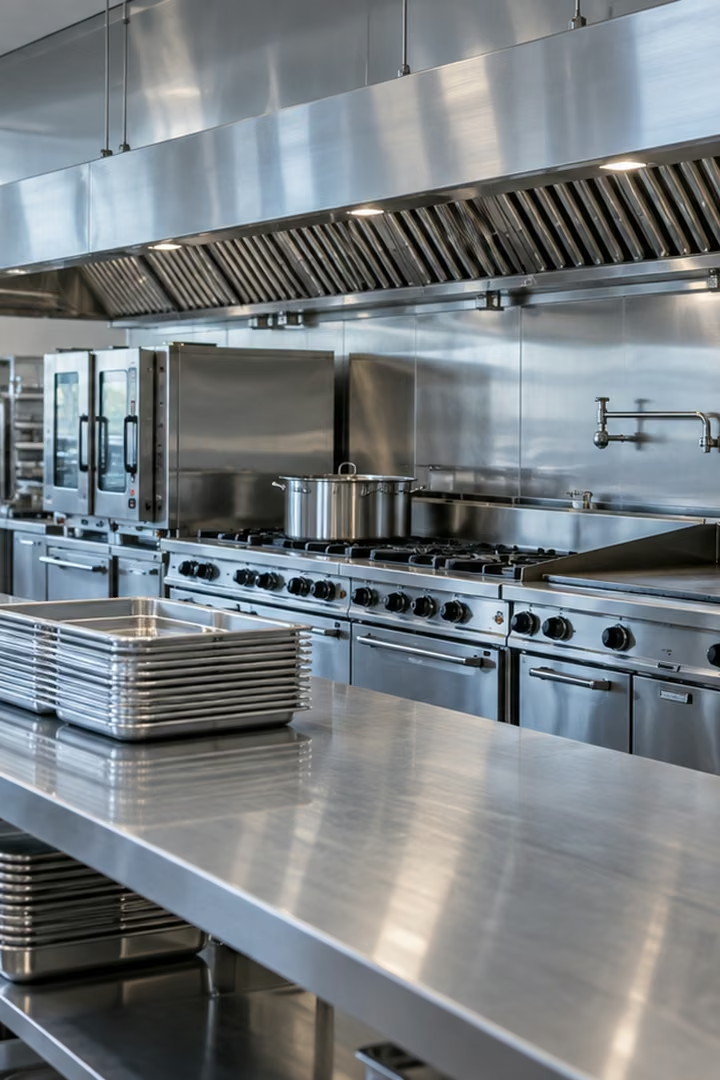
One property can contain several different kitchens.
A hotel may have a restaurant, breakfast preparation area, banquet kitchen, room-service kitchen or independently operated concession. A resort or event property may also have seasonal cooklines. List the actual systems rather than treating the property as one hood. Serving packaged food and cooking greasy meals do not create the same exhaust-maintenance needs.
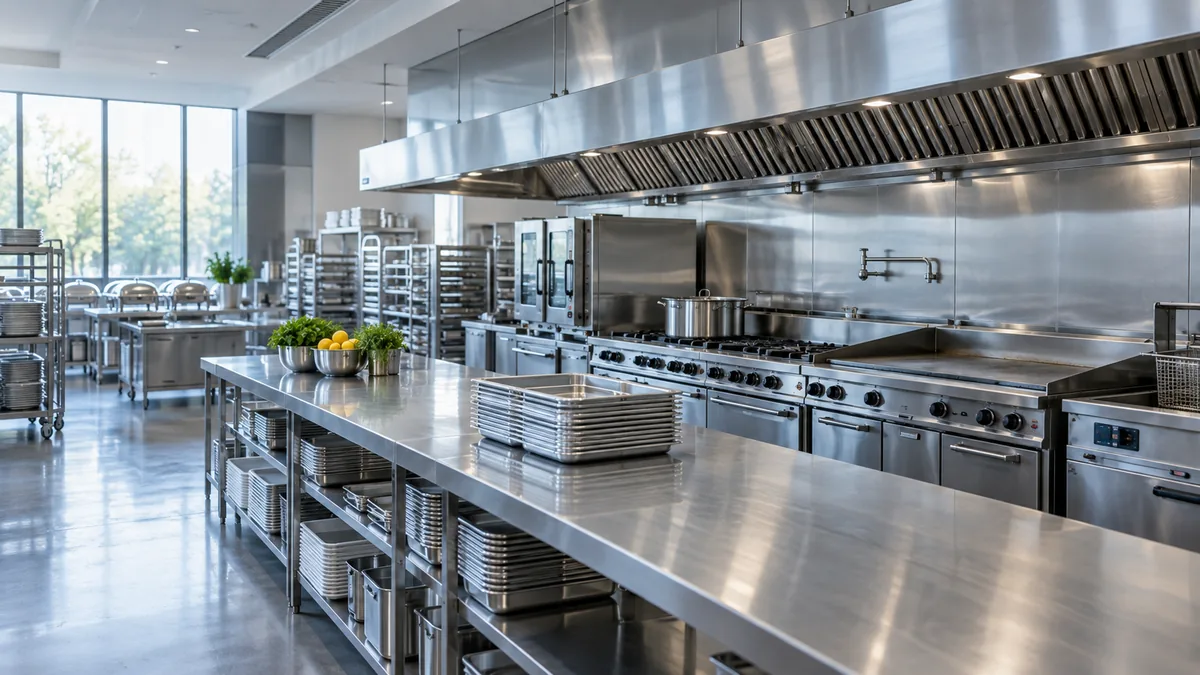
Banquets can change the cooking load.
A restaurant cookline with steady daily service and an event kitchen used for large functions may accumulate grease differently. Explain the cooking equipment, event schedule and changes in use. Do not infer a cleaning interval from the number of guest rooms or assume a seasonally quiet kitchen requires no assessment.
Identify property-management and restaurant responsibilities.
The kitchen operator may not control the roof, duct shafts or plant rooms. Confirm who can provide access and who is responsible for approving the work. Share landlord or property rules, contractor entry requirements and any restrictions around guest areas. An agreed service window should reflect the kitchen and building rather than an assumed overnight schedule.
Look beyond the polished stainless steel.
Grease can remain in the plenum, connecting ducts and fan even when the visible canopy looks presentable. Ask whether these components are included, where access is available and how limitations will be reported. Kitchen exhaust-system cleaning explains the connected scope; rooftop grease considerations belong in the facilities conversation where relevant.
Make documentation usable across departments.
Keep the service report and photographs identifiable by outlet or kitchen, especially where a property has several operators. Record what was accessed, what was cleaned and any concerns requiring follow-up. A cleaning record does not guarantee inspection passage, satisfy every insurer’s requirement or replace suppression servicing.
Request a hospitality kitchen quote.
Provide the property address, hood count, cooking methods and anticipated service windows. Mention separately operated kitchens and any access coordination needed with facilities staff. Plans and safely obtained photos can explain difficult routes or several fans. The work and availability should be confirmed for the particular property before booking.
Useful Utah references
The Utah State Fire Marshal commercial-kitchen guidance explains grease contamination and service records. Review the kitchen-exhaust licensing and personnel requirements and confirm the requirements applied to your facility with the responsible authority.
Coordinate the kitchen and the property
- Restaurant, breakfast and banquet cooking systems
- Event schedules and the agreed window to take equipment out of service
- Roof entry, loading access and property-security procedures
- Which manager will receive the records and approve any follow-up
Ready to discuss your kitchen?
Share the hood count, service address and any known access requirements.