
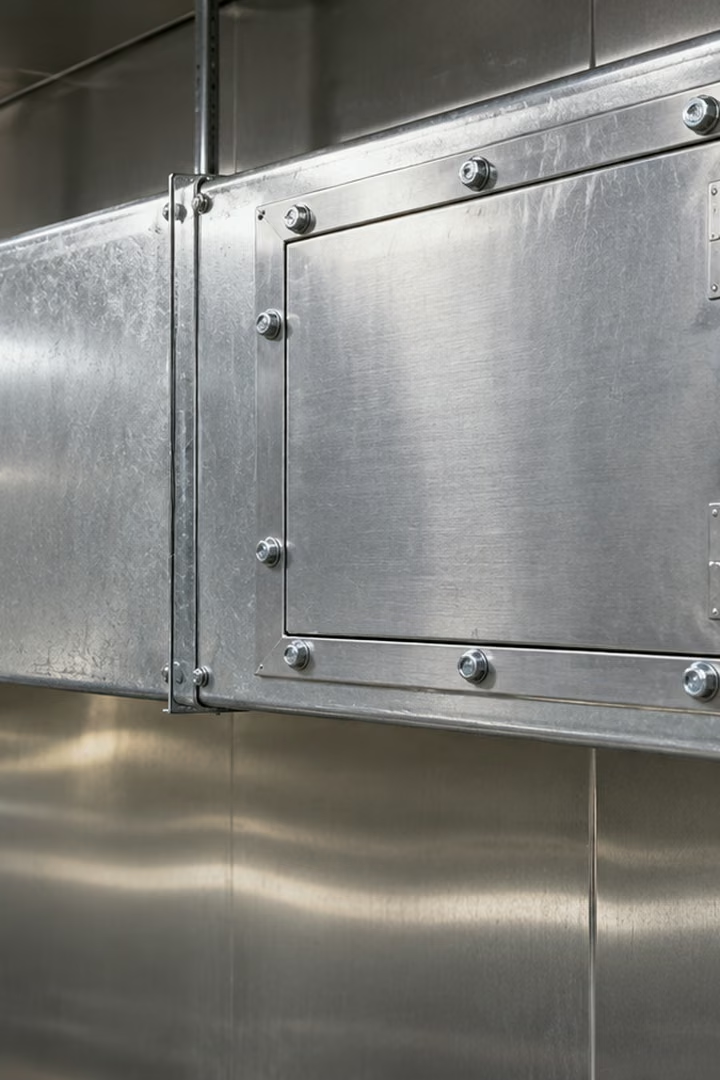
Grease removal beyond the visible hood.
Commercial kitchen exhaust ducts carry captured cooking emissions from the hood toward the exhaust fan. Grease can accumulate in sections that are not visible from the cookline. A polished canopy or recently washed filter does not establish the condition of these connected ducts. Include the actual duct route in the service conversation instead of treating the hood exterior as the entire system.
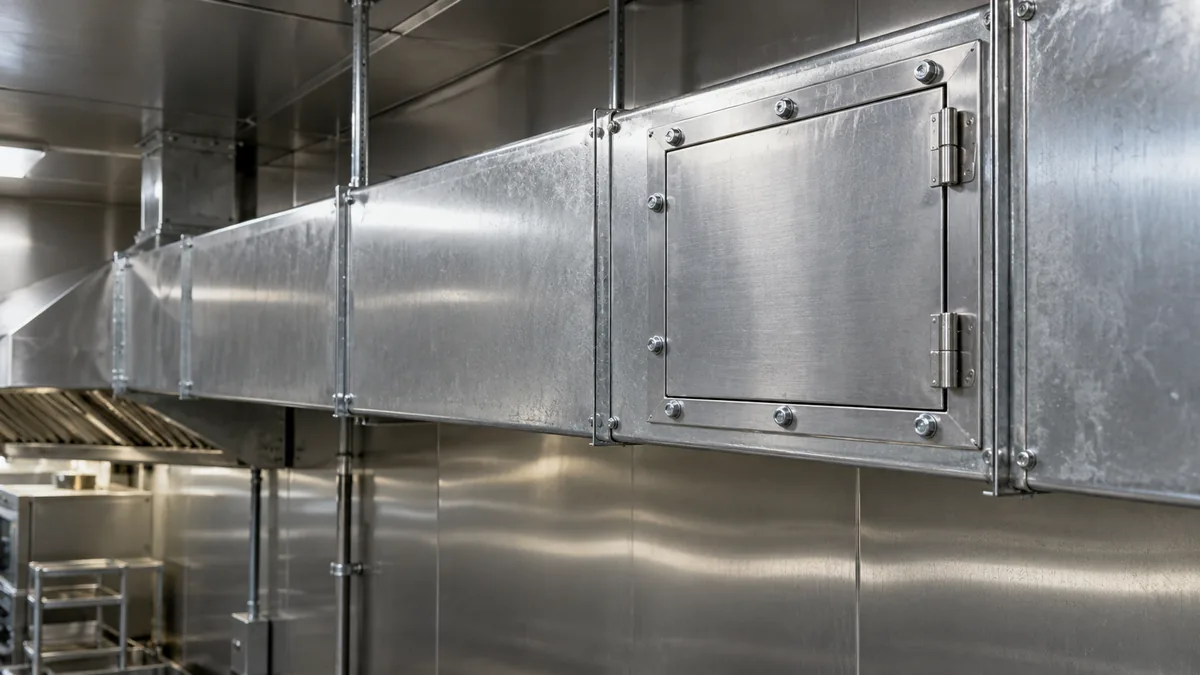
Describe access before agreeing the work
- The route from the hood transition to the fan
- Horizontal runs, changes of direction and enclosed sections
- Available service panels and previously recorded access limitations
- Which duct sections can be documented before and after service
This is cooking grease exhaust, not general air-duct cleaning.
Kitchen grease ducts have a different purpose from HVAC supply ducts, restroom ventilation, dryer vents and vehicle exhaust. These services are not interchangeable. The request should identify the commercial cooking equipment, hood and exhaust system connected to the ducts. For broader scope, see commercial kitchen exhaust-system cleaning.
Access determines what can be reached.
Horizontal runs, bends, enclosed shafts and locked service spaces can make access more involved than a short straight run. Share plans, access-panel information and any previous report identifying unreachable portions. Do not assume all ductwork is accessible simply because the fan or canopy can be opened. The agreed scope should identify how the areas will be accessed and how limitations will be recorded.
Separate grease removal from installation and repair.
A cleaning visit does not automatically include cutting new openings, installing panels, altering fire-rated assemblies or repairing damaged ductwork. Those needs should be assessed and authorized separately with an appropriate provider. Do not open a shaft, remove panels or access a roof solely to gather photographs if that is unsafe or not permitted.
Keep the hood, duct and fan connected in the quote.
The hood and plenum, grease filters and exhaust fan belong to the same exhaust path. Ask which components are included and which are documented. Exhaust cleaning does not replace suppression-system service or correct every mechanical defect in the installation.
Documentation should explain the hidden work.
Ask for identifiable images of the accessed duct sections and a report distinguishing work completed from limitations or deficiencies. A photograph at one opening cannot by itself prove that every section was reached. Retain the Completion and Deficiency Report and follow-up items with prior system records.
Request a duct-specific scope.
Provide the service address, hood count and known routing or access constraints. Include safely obtained photos, drawings and previous reports where available. Explain landlord or facilities access requirements and available service windows. The quote should reflect the actual system; no fixed duct-cleaning price or blanket access promise can substitute for those details.
Useful Utah references
The Utah State Fire Marshal commercial-kitchen guidance explains grease contamination and service records. Review the kitchen-exhaust licensing and personnel requirements and confirm the requirements applied to your facility with the responsible authority.
Before you book
- Describe the operation. Share the service address, hood count and cooking equipment.
- Agree the access. Explain locked areas, roof entry and the available service window.
- Confirm the record. Ask what photographs, limitations and follow-up information will be supplied.
Ready to discuss your kitchen?
Share the hood count, service address and any known access requirements.