
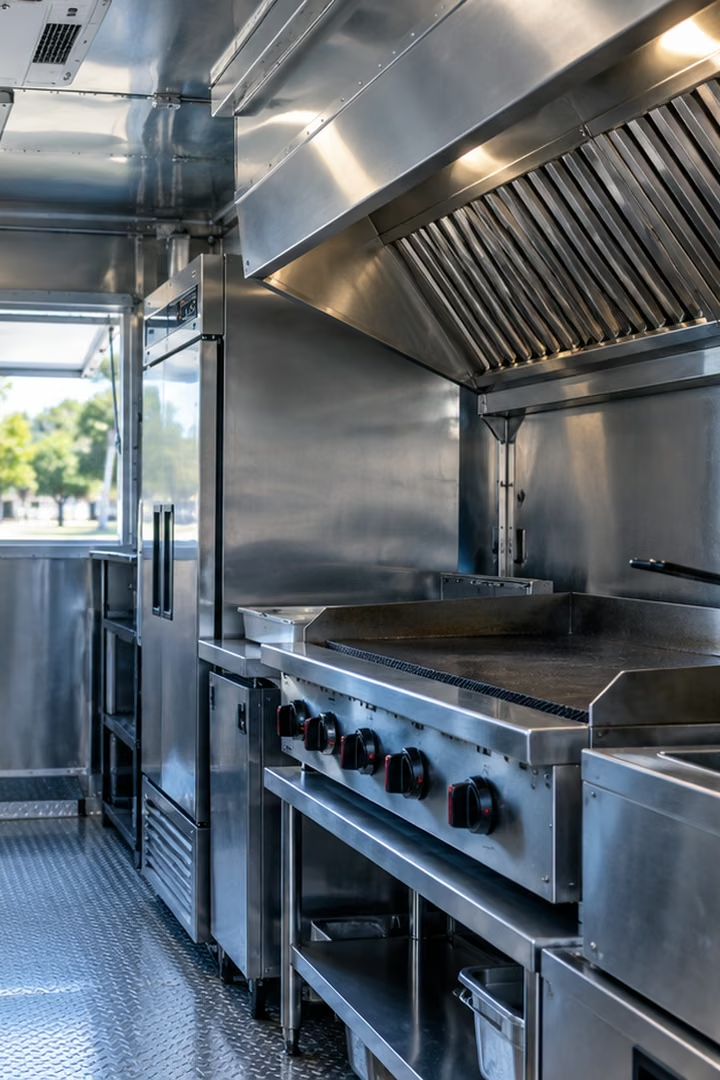
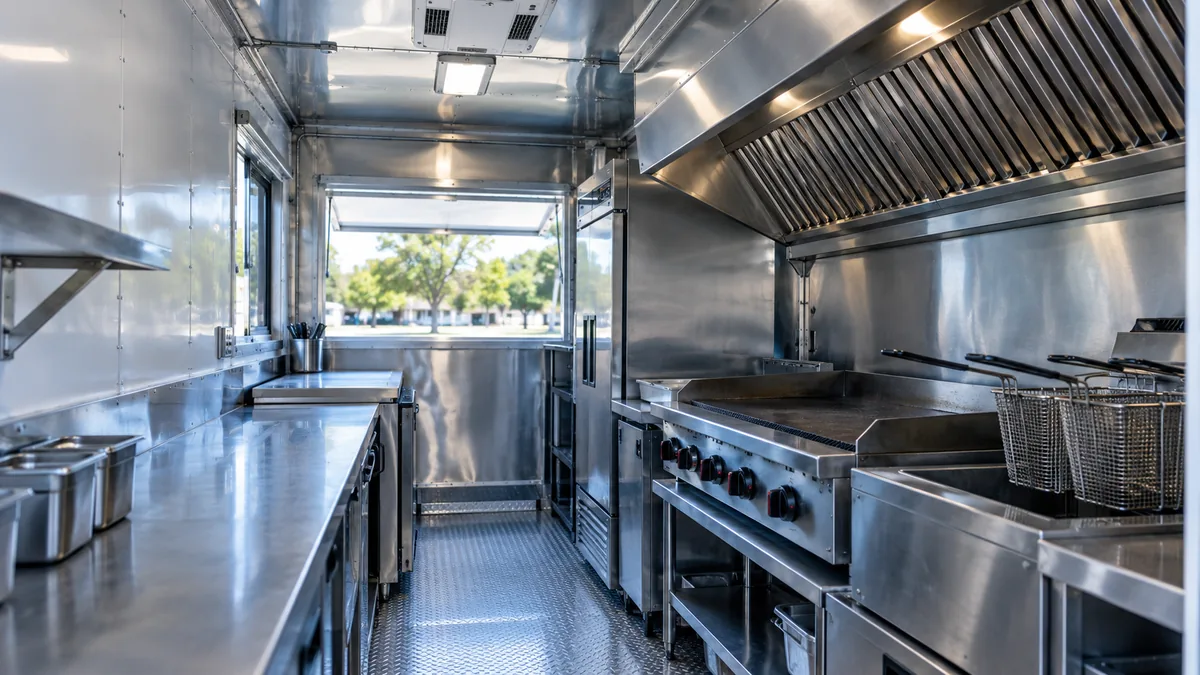
A compact mobile kitchen can still have a connected cooking-exhaust system: canopy, grease filters, plenum, duct and fan. Its small size does not establish how clean the hidden components are. Start by identifying the equipment, the exhaust path and the records from prior inspection and cleaning.
Identify the cooking exhaust, not every vent
A mobile unit may have vehicle exhaust, general ventilation and cooking-exhaust equipment serving different purposes. Grease-producing cooking should be assessed with its actual installed hood and exhaust system. Warming or serving equipment should not automatically be treated as the same grease-producing cookline.
Separate routine filter care from system cleaning
Follow the equipment manufacturer’s instructions for permitted routine care. Washing a removable filter does not prove that the plenum, connecting duct and fan are clean. Do not dismantle electrical, fuel or suppression components to attempt a deeper clean or gather quote photos. Qualified exhaust service and kitchen housekeeping have different scopes.
Let use and system condition guide the conversation
Cooking equipment, operating hours and event schedules can affect grease accumulation. Explain changes to the menu, busy periods and known deposits. Inspection and the need to remove contamination are separate decisions. Do not wait for a generic calendar date when a qualified assessment identifies grease deposits that need attention.
Prepare a usable service location
Provide the address where the unit will be available and explain parking, working-space and property restrictions. A public event location is not automatically a suitable cleaning site. Confirm mobile-unit compatibility, access and availability before booking; avoid unsafe roof access or equipment removal solely to obtain photographs.
Ask for a record tied to the unit
Keep the report, photographs, invoice and service information identifiable to the specific truck or trailer and exhaust system. Ask what components were accessed, what work was completed and what limitations or deficiencies remain. A sticker or a clean-looking exterior does not establish compliance with every fire, health or event requirement.
Confirm the qualified provider and separate scopes
Review the Utah kitchen-exhaust licensing and personnel requirements when choosing a provider. Exhaust cleaning does not replace suppression servicing, vehicle inspection, mechanical repairs or an authority’s equipment approval. Discuss those needs with the appropriate provider rather than treating them as included.
Bring the actual system to the quote
The food-truck hood-cleaning page explains the service-planning questions. Include hood count, the proposed service address, recurring-service interest and safely obtained photos or existing plans. Request a quote to discuss the actual unit and agree on the scope before a visit.
Equipment instructions, system condition and applicable requirements matter. Do not treat general maintenance information as a substitute for an appropriately qualified provider’s assessment.
Explore commercial kitchen exhaust cleaning