Follow the exhaust path from kitchen to roof.
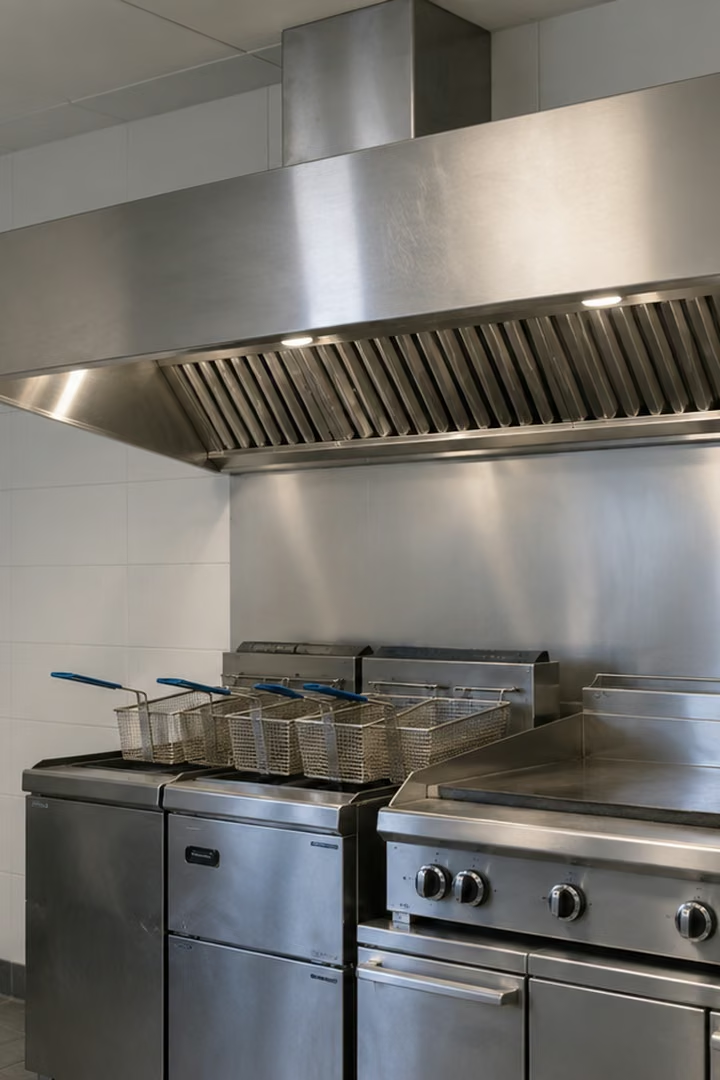
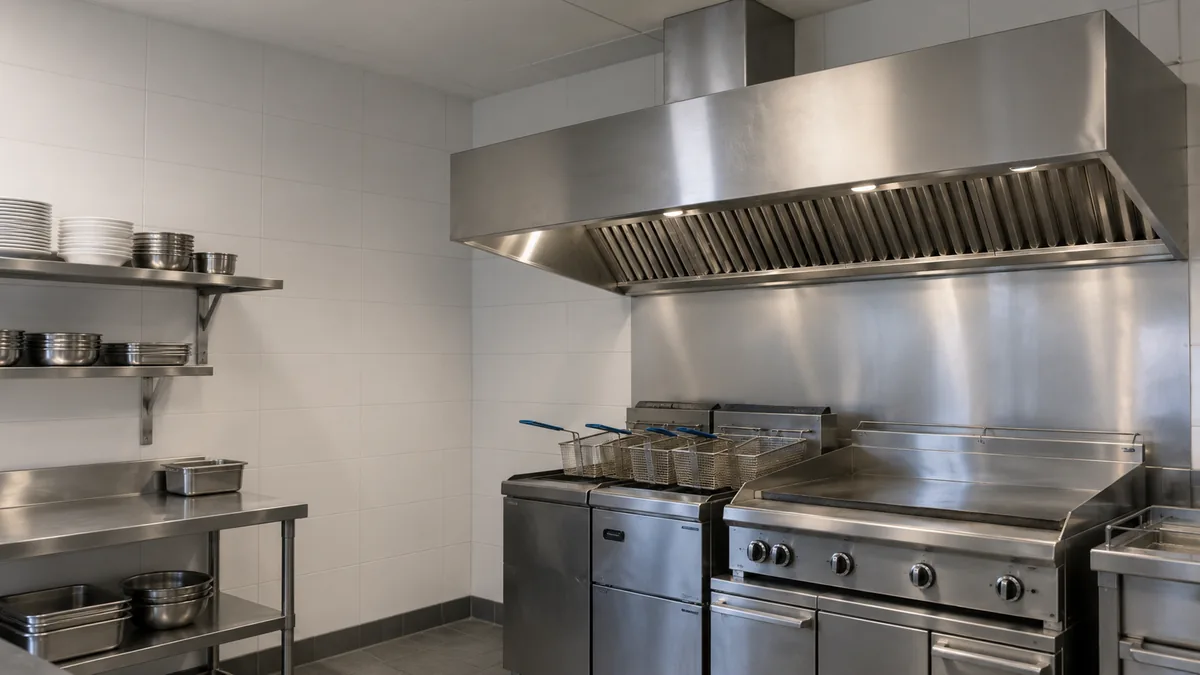
Commercial kitchen exhaust cleaning in Utah starts with a connected system, not a canopy-only wipe. The cooking-exhaust assembly connects the hood, grease filters, ductwork and fan. Captured cooking emissions move through the hood and grease-removal components into the duct network and exhaust fan. Cleaning needs to address the parts included in the service scope along that path.
What belongs in the system discussion?
- Identify every hood and the duct/fan assembly serving it
- Explain horizontal runs, enclosed shafts and access-panel locations
- Separate accessible components from portions that need further arrangements
- Ask how photographs and the service record will identify each system
Duct access matters.
Horizontal runs, turns and enclosed shafts can make access more complicated than it appears from the cooking line. Tell us about previous service limitations and available access panels. Areas that cannot be reached should be identified clearly rather than silently treated as completed.
Separate cleaning from repair.
Grease removal does not automatically repair a damaged belt, inaccessible duct section or other system defect. Discuss discovered conditions and any separately authorized repair work. Fire-suppression service also has a separate scope and should not be assumed to be included.
Ask for system-specific documentation.
Before-and-after images should identify the components photographed. Keep the service report with prior cleaning records and any deficiency follow-up. Utah State Fire Marshal guidance describes the Completion and Deficiency Report used for commercial exhaust service.
Plan around the building.
Roof access, shared exhaust arrangements, locked service areas and building operating rules may affect the visit. A clear discussion of these requirements makes it easier to set an appropriate service window and cleaning scope.
A useful component-by-component scope.
Read about hood and plenum cleaning, grease filters, grease ducts and exhaust fans. Ask which components can be accessed and how any limitations will be documented. For facility-specific questions, see the commercial kitchen industries.
Before you book
- Describe the operation. Share the service address, hood count and cooking equipment.
- Agree the access. Explain locked areas, roof entry and the available service window.
- Confirm the record. Ask what photographs, limitations and follow-up information will be supplied.
Compare the connected components.
| System area | Discuss in the quote | Clarify separately |
|---|---|---|
| Hood and filters | Canopy, plenum and grease-filter condition | Replacement filters or other parts |
| Grease ducts | Routing, access panels and reachable sections | New access arrangements or duct repair |
| Exhaust fan | Grease condition, roof entry and service records | Motor, belt, mounting or electrical work |
Ready to discuss your kitchen?
Share the hood count, service address and any known access requirements.