
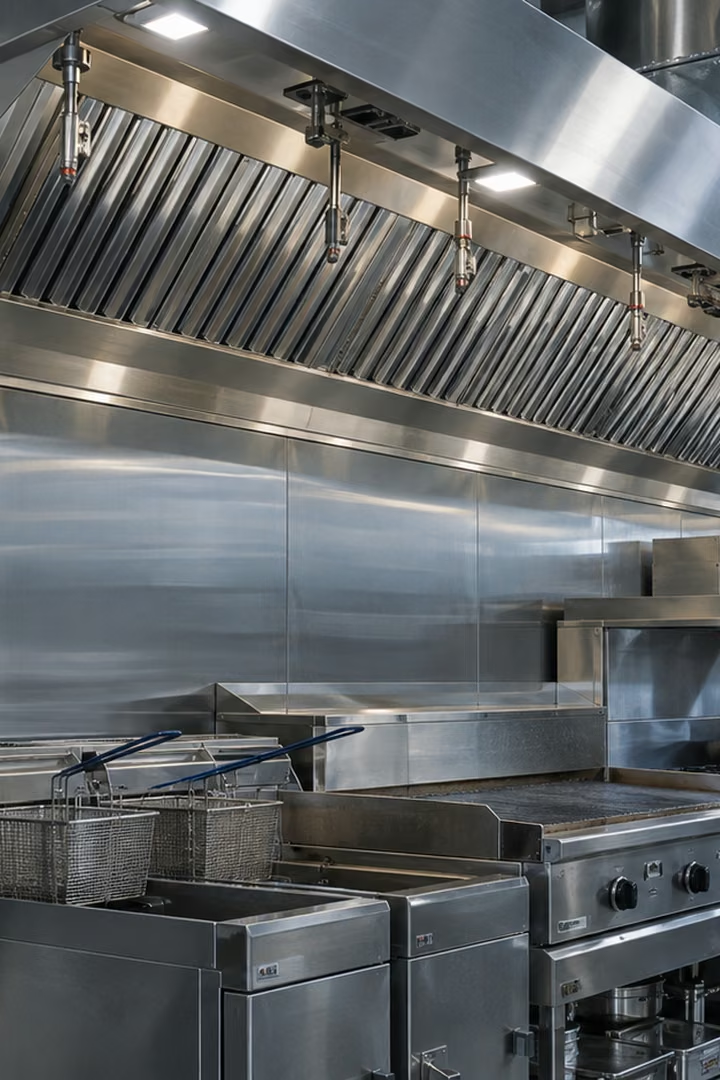
Choose the connected system, not just the visible surface.
A commercial hood captures cooking emissions above the line. Grease filters, the plenum, connecting ducts and the exhaust fan form the rest of the path. Different components need different access arrangements, so a useful quote identifies the system before describing the cleaning work.
Start with the kitchen exhaust system cleaning overview when you need to discuss the connected assembly. Use the component pages when you have a specific filter, duct, fan or rooftop concern. A bright canopy does not establish the condition of concealed sections.
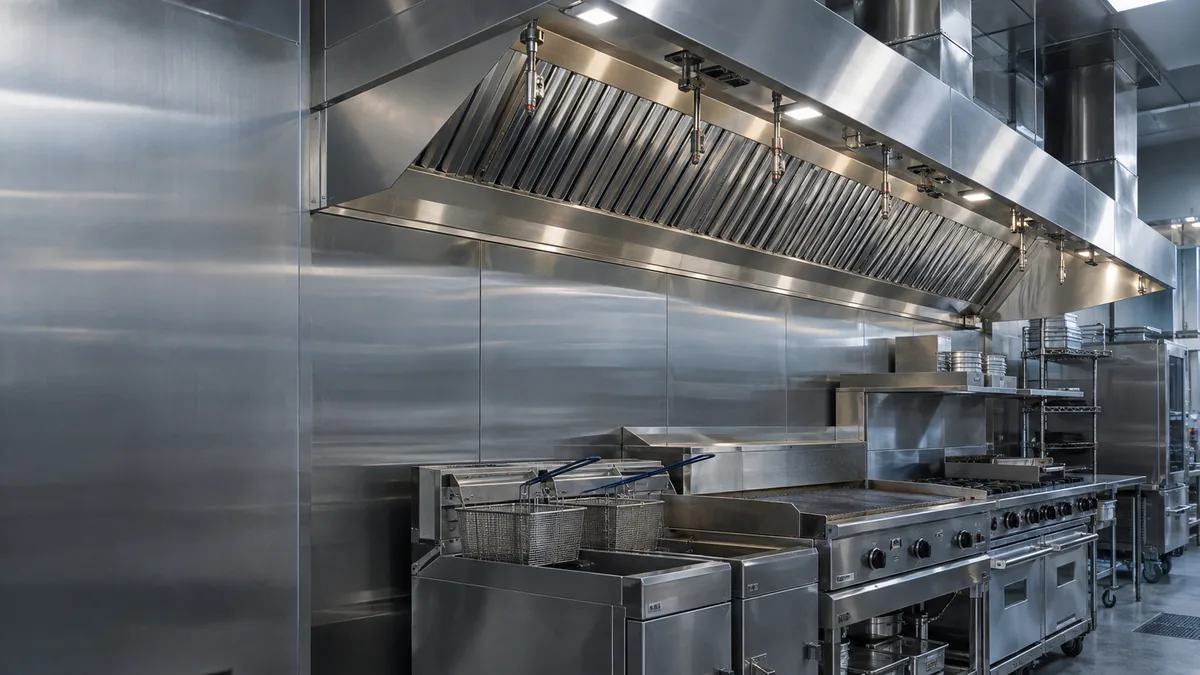
Make the component boundaries clear.
- Canopy, plenum and filters: explain the hood count, filter arrangement and cooking equipment.
- Grease ducts: identify visible routing, existing panels and previously recorded inaccessible sections.
- Exhaust fan and roof: coordinate entry and describe known grease-collection or operating concerns.
- Documentation: agree how the work, photographs, limitations and follow-up will be identified.
Cleaning is not an open-ended repair contract.
Filter replacement, motor or belt work, new duct access, roof repair and new containment installation should not be assumed to come with cleaning. Fire-suppression inspection and servicing have a separate scope and qualifications. Discuss those needs explicitly and arrange separately authorized work where appropriate.
These pages concern commercial cooking grease exhaust. General HVAC ducts, dryer vents, laboratory ventilation and grease-interceptor pumping are different services, even when they are located in the same building.
Prepare a useful request.
- Share the actual service address and number of hoods.
- Describe fryers, griddles, charbroilers or other cooking equipment.
- Explain roof entry, landlord requirements and available service windows.
- Include existing reports or photographs you can obtain safely.
Plan service around your operation.
Cooking volume, equipment use, existing grease condition and the requirements applied by the responsible authority matter. Inspection intervals and the need to remove grease deposits are not interchangeable. Ask about recurring service without assuming every kitchen needs the same calendar.
For facility-specific planning, explore the commercial kitchen settings. Restaurants, schools, healthcare dietary kitchens, hotels and shared facilities can require different coordination even when their exhaust components are similar. Then request a hood-cleaning quote with your kitchen details.
Ready to discuss your kitchen?
Share the hood count, service address and any known access requirements.