
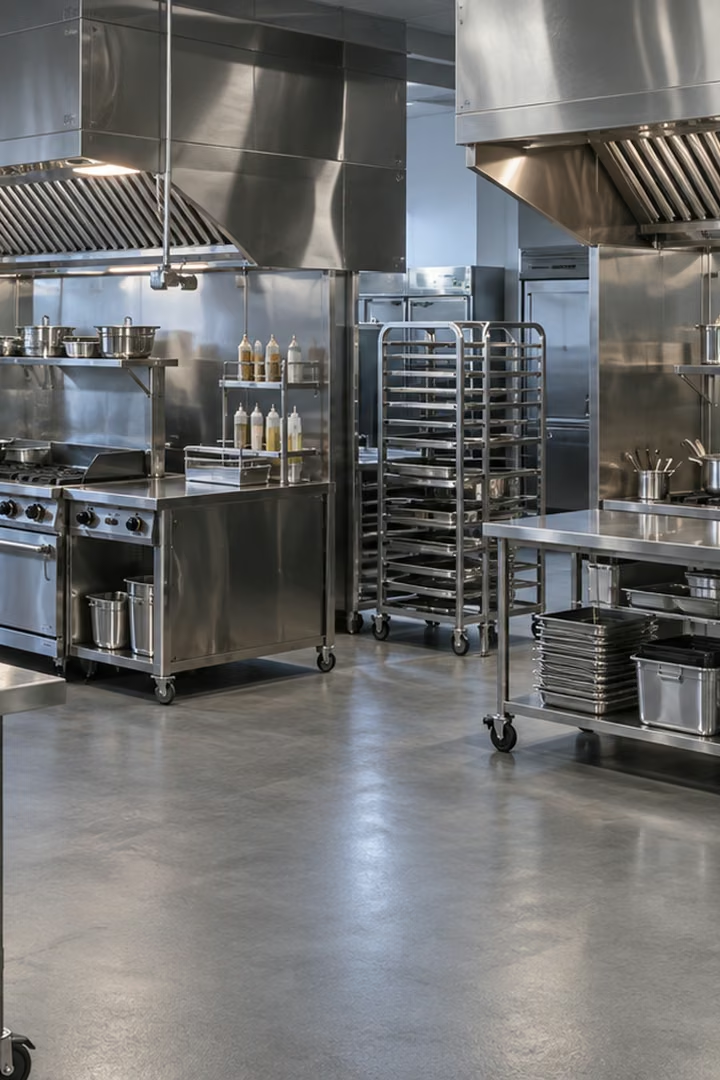
Know what the commissary is used for.
A commissary may provide cooking space, storage, washing facilities or support for mobile-food operators. Do not assume every approved commissary contains a grease-producing cookline. This service conversation concerns the hoods and exhaust systems connected to actual commercial cooking equipment, not food licensing, general sanitation or certification of the shared kitchen.
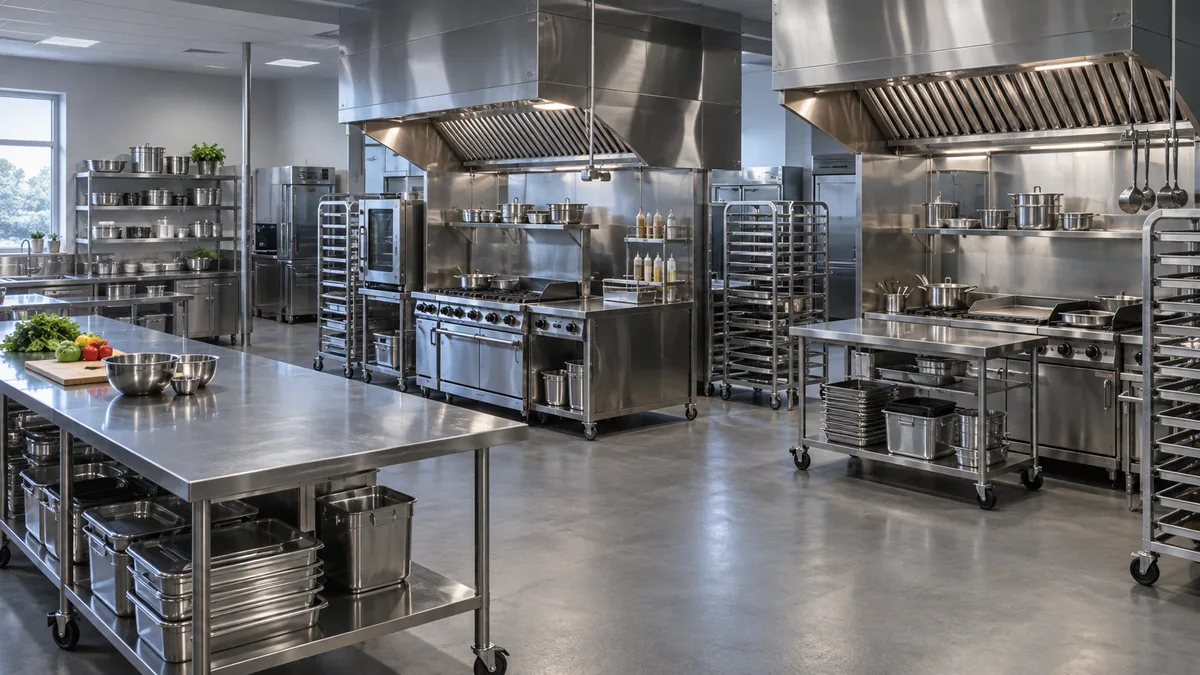
Multiple users can share one exhaust system.
Several operators may use the same hood at different times, while a larger facility may have separate systems for individual production areas. Identify which arrangement applies. The number of businesses renting space is not necessarily the hood count. Ask the facilities manager to identify fans, duct routes and the person authorized to approve the scope.
Agree who manages the maintenance record.
A tenant’s routine filter care does not necessarily cover the shared ductwork or rooftop fan. Clarify who arranges exhaust service, retains reports and handles recorded deficiencies. Keep the cleaning record attached to the actual system so a change of tenant or kitchen operator does not leave the history unclear.
Describe production schedules and access.
Catering deadlines, several users and overlapping prep shifts can limit service windows. Explain when all equipment connected to a hood can be taken out of use, who provides entry and whether roof or plant-room access needs separate coordination. Availability and the service arrangement must be agreed rather than assumed from a rental calendar.
Follow the ducts beyond the tenant space.
Shared buildings can have connecting ductwork or fans outside the immediate cooking area. Share existing plans and previous access limitations. Cleaning the tenant’s visible canopy does not automatically mean that a shared duct or remote fan was reached. The full exhaust-system scope and duct access should be part of the quote conversation.
Prepare a clear shared-kitchen request.
Provide the facility address, actual hood count, cooking equipment and operating schedule. Identify the management contact and any tenant coordination needed. Safely obtained photographs can help explain the layout. Confirm whether the request concerns one tenant’s equipment or the shared system, then review scope, documentation and availability before booking.
Useful Utah references
The Utah State Fire Marshal commercial-kitchen guidance explains grease contamination and service records. Review the kitchen-exhaust licensing and personnel requirements and confirm the requirements applied to your facility with the responsible authority.
Keep each shared system identifiable
- Hood and cooking-station identification for every operator
- The manager authorized to agree work for the shared facility
- Booking windows, tenant use and equipment availability
- Who retains the report and communicates unresolved access concerns
Ready to discuss your kitchen?
Share the hood count, service address and any known access requirements.