
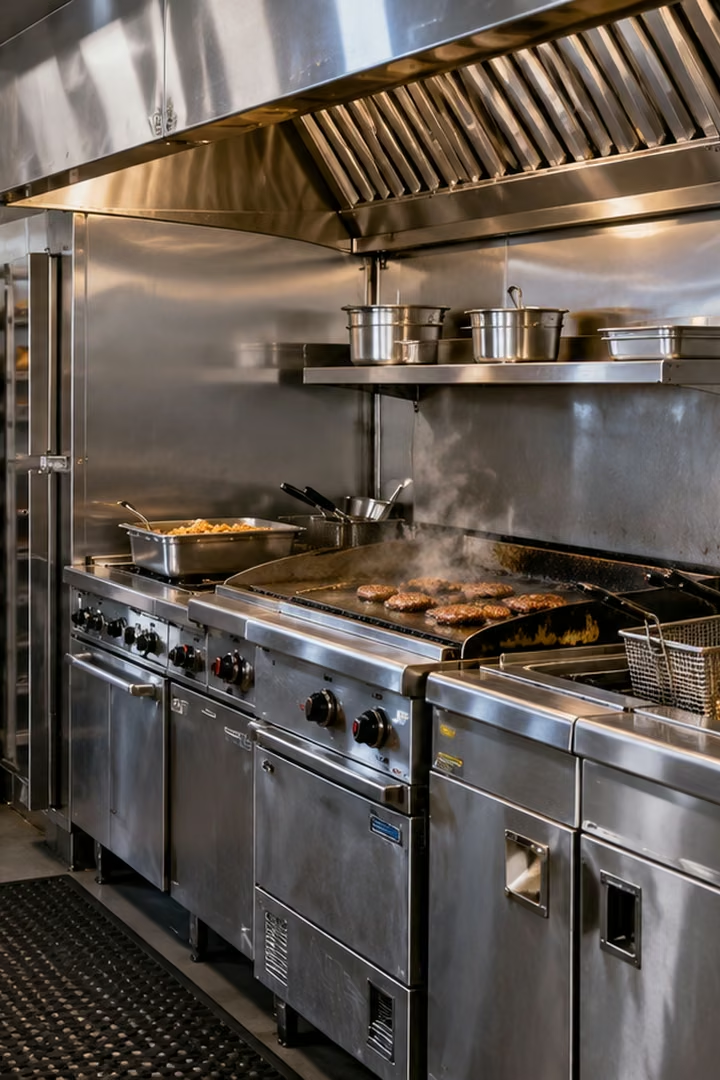
Start with the food-preparation equipment.
A grocery property may contain a deli, prepared-food cookline, bakery, café or separately operated kitchen. Different equipment can have different ventilation requirements. Focus the request on cooking systems that collect greasy emissions rather than assuming every oven, warming area or department needs the same cleaning.
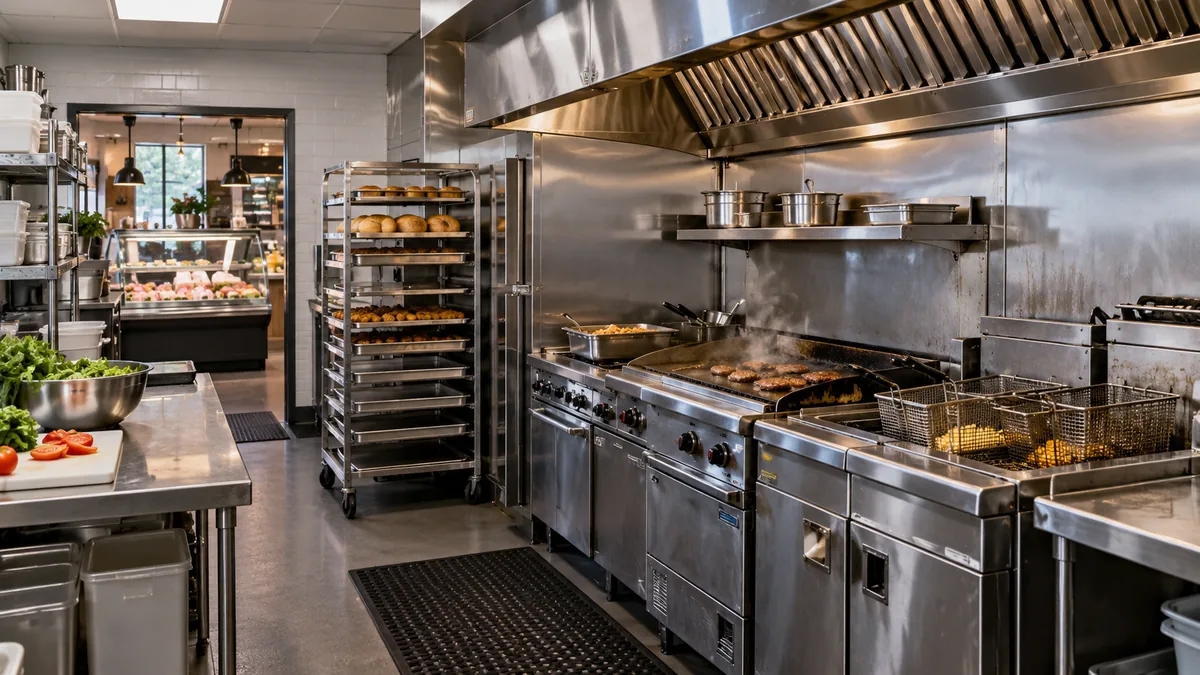
Keep departments and systems distinguishable.
List each hood and cooking area and identify whether departments share a fan or duct route. Store floor area and the number of food counters do not reliably describe the exhaust scope. Existing equipment lists and plans can help distinguish the actual systems and any concealed access outside the preparation area.
Routine housekeeping is not hidden-system cleaning.
Department staff may handle permitted filter care and ordinary surface cleaning under equipment instructions. That does not establish the condition of the plenum, grease ducts or rooftop discharge. Discuss commercial grease filters alongside grease-duct access and cleaning rather than treating either as the whole job.
Coordinate store operations and roof access.
A store can remain open while a particular food-production area is unavailable, but that arrangement needs to be planned. Explain which equipment is connected to the system and when it can be shut down. Provide the facilities contact, contractor entry procedure and roof-access requirements. Do not assume cleaning can take place while connected cooking equipment remains in use.
Report by cooking department.
Ask for documentation that identifies each department’s hood, serviced components and any inaccessible areas. Keep deficiencies and follow-up items distinct from the work completed. Exhaust cleaning does not inspect every building system, replace suppression servicing or establish a department’s food-safety approval.
Request a retail food-service kitchen quote.
Share the store address, actual hood count, cooking methods and available service windows. Explain independently operated departments or landlord-controlled areas. A useful request concerns the equipment and grease path, not a promise of whole-store cleaning. Confirm the applicable scope and availability before approving a visit.
Useful Utah references
The Utah State Fire Marshal commercial-kitchen guidance explains grease contamination and service records. Review the kitchen-exhaust licensing and personnel requirements and confirm the requirements applied to your facility with the responsible authority.
Separate the cooking stations from the retail space
- Deli fryers, griddles or other grease-producing cooking equipment
- Bakery or warming equipment that may have a different exhaust scope
- Production hours, receiving access and store-security requirements
- The facilities or department contact responsible for records
Ready to discuss your kitchen?
Share the hood count, service address and any known access requirements.