
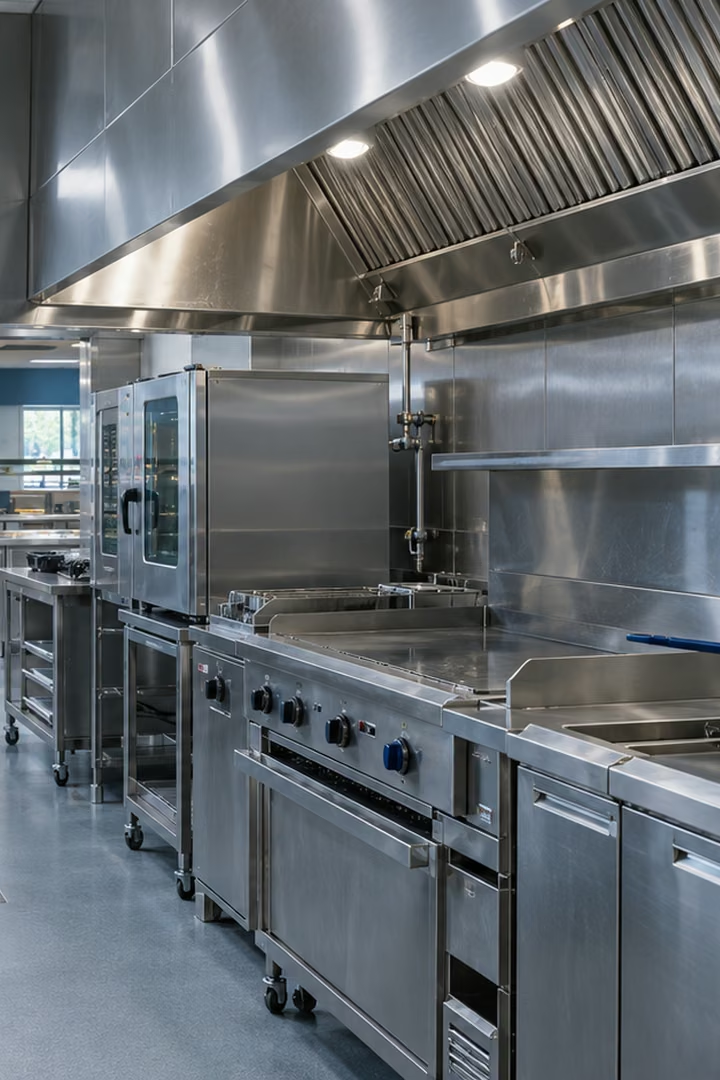
A cafeteria is not always the same kind of kitchen.
A school that prepares meals from raw ingredients may use a very different exhaust system from a satellite kitchen that mainly warms and serves delivered food. University dining halls can include several cooking stations, separate concessions and independently operated kitchens. Identify which equipment produces grease and which exhaust systems serve it before deciding what needs cleaning.
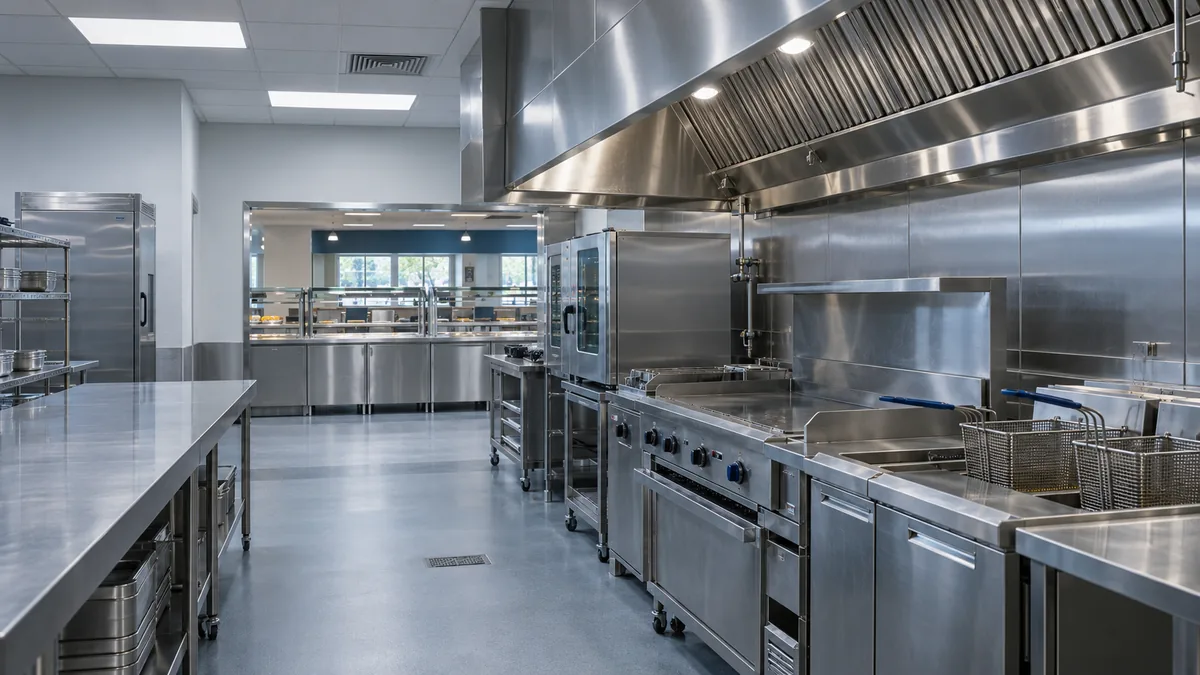
Start with the production kitchen and every cooking line.
List each building, hood and cooking line in the request. Fryers, griddles and charbroilers can contribute different grease loads from warming equipment. A dishwasher or steam-removal hood should not automatically be included as a grease-exhaust system. Laboratory fume hoods, general building ventilation and restroom fans are outside this commercial cooking-exhaust scope.
School calendars do not determine the cleaning interval.
A kitchen used only during term time and a campus kitchen preparing meals throughout the year have different operating patterns. Summer programs, catered events and changes to equipment can alter usage. Explain the actual schedule and provide prior inspection and cleaning records. A school label alone is not a reason to assign an annual, quarterly or other fixed interval.
Coordinate the building, not just the cafeteria.
District purchasing staff, food-service managers and campus facilities teams may share responsibility for the visit. Identify who controls roof entry, access panels, locked plant rooms and alarms. Include requirements for check-in, escorts or contractor documentation in the request. Agree on the service window rather than assuming school holidays or overnight access are available.
Keep records identifiable by campus and system.
Ask how the report and photographs will identify each serviced hood, duct section and fan. Record inaccessible portions and follow-up concerns rather than accepting a generic campus-wide completion statement. Keep the invoice, Completion and Deficiency Report and service information with the correct facility records; one clean system does not establish the condition of every kitchen.
Request a school or university kitchen quote.
Share the campus address, hood count, cooking schedule and the name of the person coordinating access. Existing plans and safely obtained photographs can help explain multiple systems or difficult duct routing. Use whole-system exhaust cleaning to understand the scope and grease-duct cleaning for access considerations beyond the canopy.
Useful Utah references
The Utah State Fire Marshal commercial-kitchen guidance explains grease contamination and service records. Review the kitchen-exhaust licensing and personnel requirements and confirm the requirements applied to your facility with the responsible authority.
Before a campus service visit
- Addresses and hood counts for each production kitchen
- Meal-production, term-time and summer-program schedules
- District or campus check-in, escort and roof-entry requirements
- The facilities contact and records for the individual systems
Ready to discuss your kitchen?
Share the hood count, service address and any known access requirements.