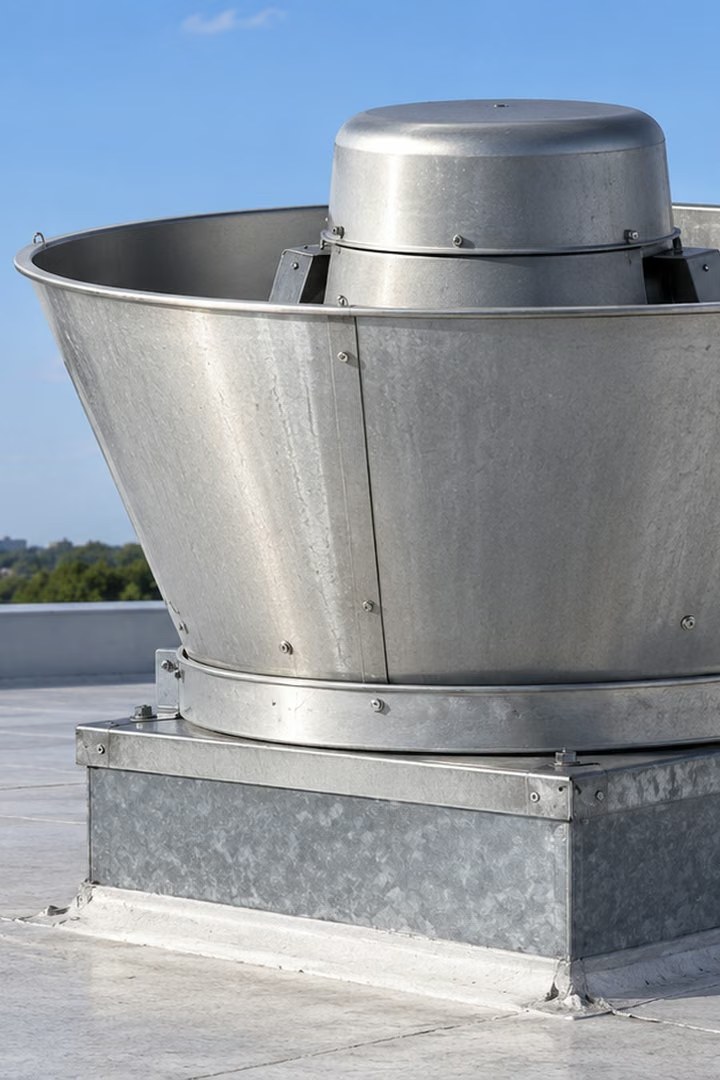
The fan is part of the grease path.
The rooftop exhaust fan draws cooking emissions through the system. Grease can accumulate on fan components and around the discharge area. Include the fan in the scope discussion instead of stopping at the kitchen canopy.
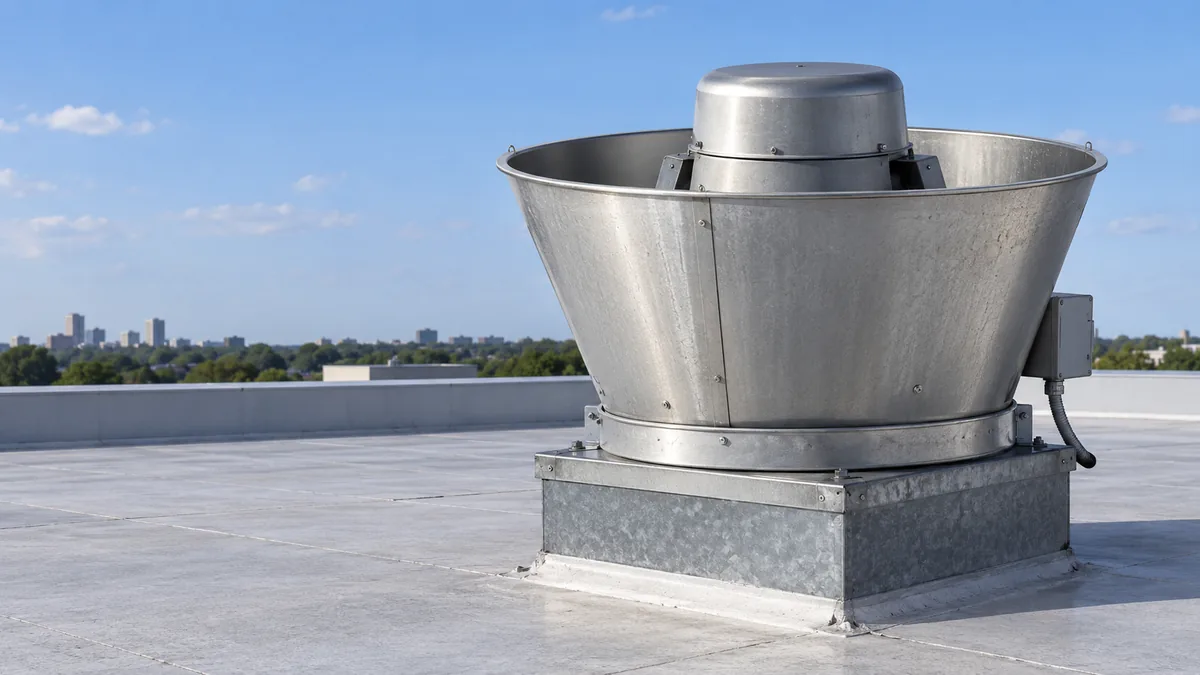
Plan for the fan as well as the cookline
- Which roof fan serves each hood or cooking line
- Who can approve roof entry and unlock access areas
- Observed noise, vibration, leakage or operating issues
- Any existing grease-collection components around the discharge area
Roof access must be arranged.
Let us know how the roof is accessed and whether a landlord, facilities manager or security team controls entry. Share restrictions that affect safe access and service timing. Access conditions should be understood before the appointment.
Cleaning and mechanical work need separate clarity.
A fan that is noisy, damaged or not operating properly may need mechanical attention in addition to grease removal. Discuss any observed condition and the limits of the cleaning scope. Do not treat cleaning as a promise to restore a defective motor or belt.
Document what is visible and what needs follow-up.
Ask for photographs of the serviced fan and any recorded deficiencies. Keep roof or containment concerns with your facilities records so the appropriate provider can address them.
Connect fan observations to the right system.
A building with several cooking lines may have more than one exhaust fan. Identify the hood served by the fan and explain whether roof access is shared with another tenant. Building plans, prior photographs and a facilities contact can help clarify the arrangement without sending kitchen staff onto the roof.
Keep cleaning concerns distinct from electrical or mechanical faults. A service report can record observations and limitations, but cleaning is not a promise to correct a defective motor, belt, mounting or roof assembly. Arrange separately authorized work with the appropriate provider.
Keep the related components in view.
Explore rooftop grease containment when planning the connected exhaust scope. Ask which parts of the system are included, which may need separate arrangements and how those limits will be recorded.
Before you book
- Describe the operation. Share the service address, hood count and cooking equipment.
- Agree the access. Explain locked areas, roof entry and the available service window.
- Confirm the record. Ask what photographs, limitations and follow-up information will be supplied.
Ready to discuss your kitchen?
Share the hood count, service address and any known access requirements.