
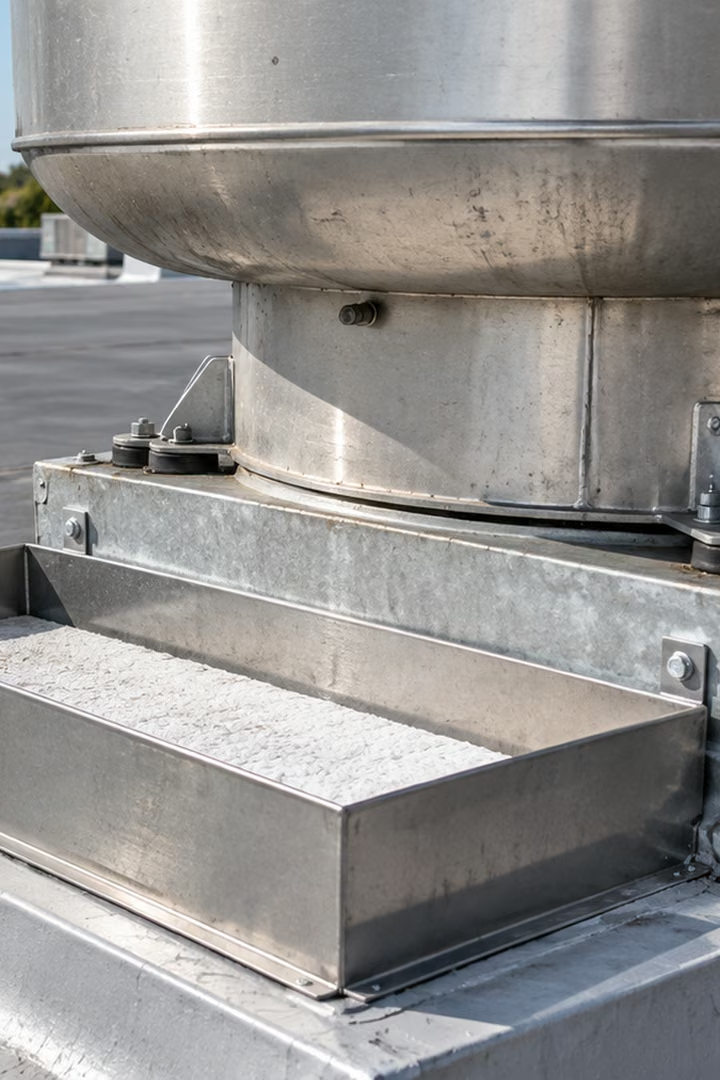
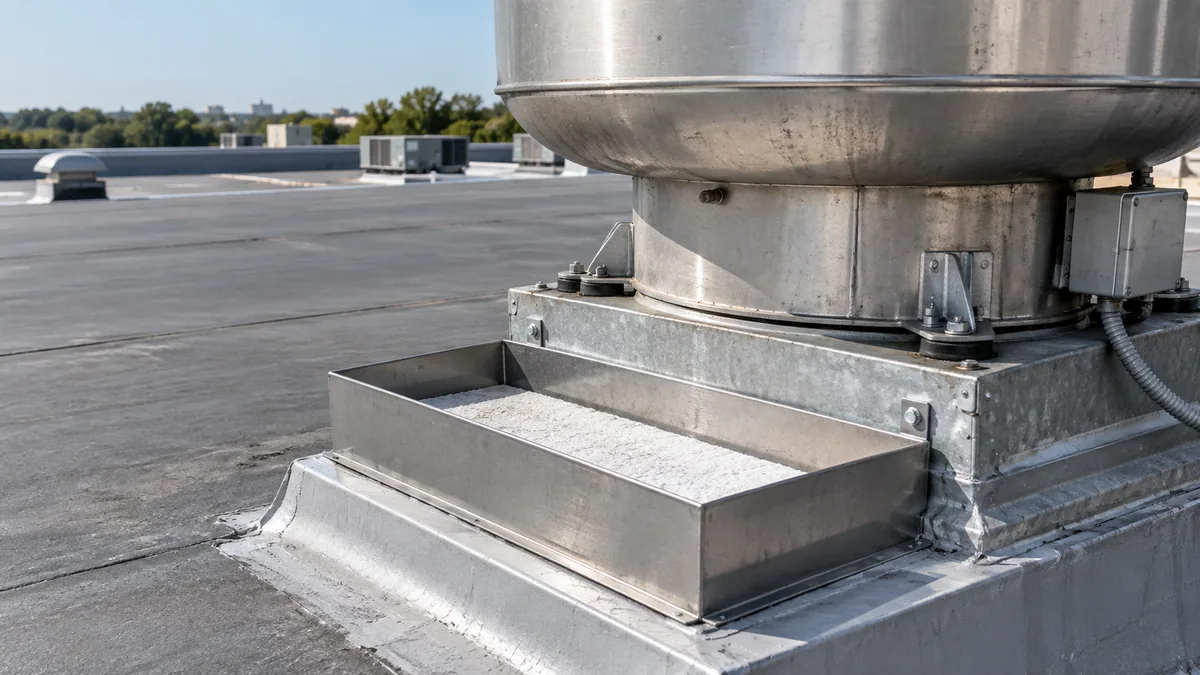
The useful cost question is not just the price to clean one visible hood. It is the price for the agreed work on your actual cooking-exhaust system. A short canopy connected to a difficult duct route can need a different scope from a larger hood with straightforward access. Without the equipment, condition and access details, a generic price range can make two very different jobs look comparable.
Confirm what is included before comparing quotes
Identify the canopy, grease filters, plenum, connecting ducts and exhaust fan. Ask whether the quoted work includes each component, what can be reached and how limitations are recorded. A hood-only surface clean and a whole-system grease-removal scope are not interchangeable simply because both are described as hood cleaning.
Duct routing and access affect the work
Horizontal runs, turns, enclosed shafts, locked plant rooms and landlord-controlled roofs can complicate access. Share drawings and prior reports identifying inaccessible portions. Grease-duct cleaning explains why access belongs in the initial conversation. Creating new access, repairing ductwork or changing the installation is separate work that should not be assumed to be included.
Describe the grease condition and cooking operation
Tell the provider about equipment, operating hours, the previous service date and known deposits. Fryers, charbroilers and solid-fuel equipment can create different conditions from a lower-use kitchen. Do not treat another business’s quote or a standard calendar interval as an assessment of your own system.
Explain service timing and building requirements
A kitchen’s available shutdown window, roof access and check-in procedures can affect the service arrangement. A school, care facility or shared kitchen may involve more than one person responsible for approving access. Confirm the work window before booking rather than assuming overnight, emergency or restricted-site service is part of the price.
Keep additional work separate and authorized
Replacement filters, mechanical fan repairs, electrical work, access installation, grease-trap pumping and suppression-system service are not automatically included in exhaust cleaning. If a concern is discovered, ask how it changes the scope and price before authorizing more work. An itemized agreement makes comparison more useful than a single number without exclusions.
Ask what the record will show
The Utah State Fire Marshal guidance discusses service reports, photographs, invoices and labels. Ask how the completed components, limitations and deficiencies will be documented. Retain the agreed scope and any change authorization with the invoice and maintenance record.
Discuss recurring service without assuming a fixed discount
If you want ongoing cleaning, explain that in the request. The schedule should reflect cooking activity, system condition and applicable authority requirements. Recurring work is an arrangement to discuss, not a guarantee of a particular price, discount or interval.
Request a system-specific quote
Send the hood count, service address, recurring-service interest and useful access details. Safely obtained photos or existing plans can clarify the system. Start with commercial hood cleaning or request a quote for the actual scope. No published number here substitutes for that assessment.
Equipment instructions, system condition and applicable requirements matter. Do not treat general maintenance information as a substitute for an appropriately qualified provider’s assessment.
Explore commercial kitchen exhaust cleaning