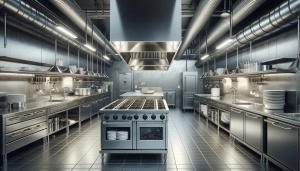
Picture a busy Friday night in downtown Salt Lake City. The tickets are printing non-stop. The line cooks are moving like a synchronized swimming team, and the fryers are bubbling away. It is beautiful chaos. But honestly? Along with all those amazing smells of searing steak and frying potatoes, there is something else floating up toward the ceiling. Grease. Vaporized, invisible grease. You do not always see it right away, but it is there. And it is looking for a place to stick.
If you run a restaurant around here, you already know the struggle. Keeping a Commercial kitchen spotless feels like fighting a war where the enemy never sleeps. You wipe down the stainless steel. You scrub the quarry tile floors until your arms ache. But what about the spaces you cannot easily reach? Look up. That massive metal canopy hanging over your cooking line is working overtime. That is your hood system. Getting rid of the grease trapped inside it the right way is not just about passing a health inspection. It is about keeping your building from going up in flames.
The Sticky Truth About Kitchen Exhaust Systems
Let me explain how this whole thing actually works. When you cook, heat causes oils and animal fats to vaporize. Those vapors ride the hot air straight up into your Exhaust hood. The hood acts like a giant vacuum cleaner, pulling the smoke and grease-laden air out of the kitchen so your staff can actually breathe.
You know what? It reminds me of cooking bacon in a small apartment. You fry up a few slices, and suddenly the walls feel a tiny bit slick. The air gets heavy. Now, imagine cooking five hundred strips of bacon every single day for a month. That is what your restaurant’s Exhaust system is dealing with. The grease cools down as it travels through the ductwork, and it turns back into a thick, sticky liquid. It coats the filters. It lines the metal ducts. It pools around the fan on your roof.
If left alone, this greasy film hardens into a dense, highly combustible resin. It is completely out of sight, which is exactly why it is so dangerous. A kitchen can look absolutely spotless to a customer sitting in the dining room, while a massive fire hazard quietly grows just above the ceiling tiles.
Wiping It Down Is Not Cleaning It
Here is the thing. A lot of folks think they can just have the dishwashers take a rag to the shiny part of the hood at closing time and call it a day. Do not get me wrong, making the outside look pretty is nice. But a quick wipe down with some degreaser is completely superficial. It does absolutely nothing for the fire hazard hiding out of sight.
In the professional restaurant hood cleaning business, we talk about cleaning to bare metal. This is a strict requirement set by the National Fire Protection Association, specifically NFPA 96. They write the rules on ventilation control and fire protection for commercial cooking operations. If your system is not cleaned down to the bare metal throughout the entire duct run, you are technically out of compliance. It is that simple.
Breaking Down the Anatomy
Your exhaust setup has a few main parts, and understanding them helps explain why a simple towel wipe fails. You have the hood canopy itself. Then you have the baffle filters, which are those metal grates that catch the heaviest grease droplets. Behind the filters is the plenum, a dark little cave where air gathers before moving up. From the plenum, the air travels through the ductwork. Finally, it reaches the upblast exhaust fan on the roof. Every single one of these components gets completely plastered in grease over time.
Getting Rid of Grease the Right Way: The Professional Process
So, how do we actually get rid of all that built-up grime? You cannot just spray some hot water up there and hope for the best. True commercial Kitchen Hood Cleaning is a messy, intense, and highly chemical process.
First, we prep the kitchen. We wrap the entire hood in heavy-duty plastic sheeting, creating a funnel that leads directly into a collection barrel. We cover your fryers, your flat tops, and your ovens. We do not want a single drop of dirty water splashing onto your cooking surfaces. Protection is the very first step.
Next, we apply the heavy artillery. We use industrial-strength, caustic chemical degreasers. These are not the kind of soaps you buy at the grocery store. The science behind degreasing is actually pretty fascinating. We use chemicals that trigger a chemical reaction called saponification. Essentially, the highly alkaline compounds react with the acidic animal fats and turn them into a water-soluble soap. It is chemistry in action.
You are taking a rock-hard, sticky resin and melting it down into a liquid that we can safely wash away. We spray the degreaser onto the filters, inside the plenum, all the way up the duct shafts, and directly onto the roof fan blades. We let it dwell. We let it eat the grease.
| Tool | What It Does | Why It Matters |
|---|---|---|
| Caustic Degreaser | Breaks down hard carbon and fat | Loosens grime that water alone cannot touch |
| Pressure Washer | Sprays water at 2,000+ PSI | Blasts away the dissolved grease to reveal bare metal |
| Specialty Scrapers | Physically removes stubborn chunks | Handles the thickest buildup before washing |
Then comes the water. We bring in hot water pressure washers. We are talking water heated to over 200 degrees, blasting at high pressure. We climb up on the roof and wash the fan. We wash down the ductwork. We spray out the plenum. All that nasty, brown, sludge-like grease flows down the plastic funnel and into our collection bins. We even scrape the really stubborn areas by hand. It takes elbow grease, literally.
The Salt Lake City Scene: Elevation, Weather, and Grease
Let us talk about our local environment for a second. Operating a kitchen in Salt Lake City, UT is a bit different than running a joint at sea level. The elevation actually plays a sneaky role in how your exhaust system functions.
Air is thinner up here along the Wasatch Front. Your exhaust fan has to work a little harder to pull the same volume of air out of the building. When your fan blades get weighed down by a thick layer of heavy grease, the motor strains. It loses efficiency fast. Suddenly, your kitchen feels hotter. The smoke lingers longer.
Consider our changing seasons, too. In the summer, the dry Utah heat means rooftop temperatures can easily soar past 120 degrees. If your exhaust fan is leaking grease onto the roof, that intense heat basically bakes the grease into the roofing membrane. Over time, animal fat literally eats through commercial roofing materials. You think a routine cleaning is expensive? Try replacing a section of a commercial roof because acidic fat eroded the waterproofing. In the winter, the cold outdoor air mixing with the extremely hot exhaust air can cause grease to harden and crystallize inside the ducts much faster. It turns into a solid wall of carbon.
Telltale Signs Your Exhaust System Is Begging for Help
Honestly, your kitchen will usually tell you when it is time for a professional cleaning. You just have to know what to look for. Or listen for.
- The lingering smell of old oil: When you walk into the restaurant in the morning, before anyone starts cooking, does it smell like rancid fryer grease? That smell is usually coming straight out of the hood.
- A noisy or rattling roof fan: If the fan sounds like a helicopter trying to land on your roof, the blades are likely unbalanced due to heavy grease buildup. The motor is fighting a losing battle.
- Smoke filling the kitchen: This is the most obvious sign. If your line cooks are tearing up because the smoke isn’t drafting properly, your filters and ducts are probably choked off.
- Grease dripping from the hood seams: If you ever see a yellow or brown drip forming on the shiny metal canopy, call someone immediately. That means the system is completely overwhelmed and leaking.
What Happens When You Ignore the Grease?
We need to talk about the worst-case scenario. It is not pretty, but it is reality. The leading cause of restaurant fires in the United States is grease-related.
Imagine a flare-up on the flat top. It happens all the time. Usually, a flare-up is no big deal. The chef throws a towel on it or turns off the gas, and the flames die down quickly. But if your exhaust system is lined with a half-inch of highly flammable grease, that brief flash of fire can be sucked right up into the duct.
Once fire enters the ductwork, what do you think happens? The fans on the roof actually feed oxygen to the flames, acting like a giant bellows. The fire shoots through the duct, burning at thousands of degrees, and spreads to the roof and the rest of the building structure. It is terrifying. And it happens faster than you can grab a fire extinguisher off the wall.
Beyond the physical danger, there is a massive financial risk. Fire marshals and local health inspectors in Utah do not mess around. They will shut your doors if they find a severe grease hazard. Furthermore, if you do have a fire and your insurance company discovers you haven’t maintained your routine hood cleaning service schedule, they will likely deny your claim entirely. You are left holding the bag for the entire loss.
The Solid Fuel Complication
Let us pivot for a second. Does your restaurant cook with solid fuel? If you are smoking brisket over hickory wood or firing pizzas in a wood-burning oven, the game changes entirely. You are not just dealing with grease anymore; you are dealing with creosote. Creosote is a highly combustible, tar-like substance that coats the inside of your ducts when wood burns. It sparks incredibly easily. If your kitchen uses wood or charcoal, the fire codes require much more frequent inspections and cleanings because the risk factor is multiplied exponentially.
Setting Up a Maintenance Schedule That Makes Sense
So, how often should you actually be scheduling cleanings? It depends heavily on what you cook and how much you cook.
If you run a 24-hour diner or a fast-food joint doing high-volume frying, you need cleaning every single month. The grease accumulation happens insanely fast. For a standard sit-down restaurant, quarterly cleanings usually hit the sweet spot. If you operate a small cafe, maybe baking bread and making soup, you might only need a deep clean once or twice a year.
The trick is consistency. Do not wait until the fire inspector is breathing down your neck. Do not wait until your roof fan burns out its motor. Keeping a clean hood extends the life of your equipment. Your HVAC system won’t have to work as hard, saving you money on utility bills.
Speaking of your staff, keeping the kitchen environment safe is a huge morale booster. Working the line is already a grueling job. It is hot; it is stressful; and you are constantly on your feet. When the ventilation actually works right, it is like a breath of fresh air; literally. You show your team that you care about their working conditions. That kind of stuff matters. It reduces turnover. It builds loyalty.
Trusting the Right People for the Job
Here is a little piece of advice. Do not just hire the cheapest guy with a power washer in the back of his pickup truck. True cleaning requires specific training, the right chemicals, and a deep understanding of complex fire codes.
We have seen absolute nightmares left behind by amateur cleaners. They clean the visible parts of the hood to make it look shiny, but they leave the entire duct system completely packed with grease. They skip the roof fan. They leave a mess on the kitchen floor.
A legitimate professional leaves a certification sticker on your hood showing the date of the cleaning, the standard met, and when the next cleaning is due. This sticker is exactly what the fire marshal looks for when they do their surprise walk-throughs.
When a team does the job right, the difference is night and day. The stainless steel shines. The filters draft air perfectly. The fan runs quietly. You can practically feel the air moving correctly through the building again. It is peace of mind. You lock the doors at night knowing the risk of a catastrophic duct fire has been virtually eliminated.
Doing Your Part Between Cleanings
While professionals handle the heavy lifting and the bare metal cleaning, there are things your kitchen staff should be doing regularly to keep the grease monster at bay.
First, run your baffle filters through the dish machine every single night. I know it is a pain at the end of a long shift, but keeping those filters clear allows the air to flow properly. If the filters are clogged, the grease just settles everywhere else in the kitchen.
Second, empty the grease catch trays daily. These are the little metal cups sitting under the edges of the hood. If they overflow, you end up with a slick floor and a major slipping hazard for your cooks.
Lastly, train your staff to never toss water onto a grease flare-up. It sounds like basic knowledge, but in a panic, people do crazy things. Keep the right class of fire extinguishers easily accessible and ensure everyone knows how to activate the hood’s built-in fire suppression system.
Protecting Your Utah Restaurant
Running a food service business takes an unbelievable amount of passion and hard work. You obsess over your menu. You worry about food costs. You train your front-of-house staff to provide amazing service. Do not let something as easily manageable as grease buildup ruin everything you have built.
Cleaning your kitchen exhaust system the right way is an investment in your business’s safety, efficiency, and longevity. It is about doing things the right way, not taking shortcuts. Whether you are running a bustling steakhouse near Temple Square or a cozy neighborhood burger joint out in Sandy, you need an exhaust system that functions flawlessly.
If you are ready to protect your restaurant from dangerous grease buildup, Utah Hood Cleaning is here to help you get the job done right. Give our team a call today at 801-853-8155 to talk about your kitchen’s needs. You can also easily Request a Free Quote and set up a cleaning schedule that keeps your doors open and your staff safe.