
Picture this. It is a Friday night, right in the middle of the dinner rush here in Salt Lake City. The ticket machine is printing faster than your line cooks can even read the orders. Pans are sizzling, servers are rushing in and out of the swinging doors, and everything is humming along perfectly. Then, your dishwasher yells out something you absolutely never want to hear. The floor drain is backing up. Honestly, there is nothing that ruins a flawless dinner service faster than the unmistakable, stomach-turning smell of an angry Grease trap.
If you run a Commercial kitchen, you already know that grease is your biggest enemy. It gets everywhere. It coats the floors, clogs up the sink drains, and creates a massive headache if you do not stay ahead of it. Most restaurant owners focus entirely on the food and the customer experience, which makes total sense. But underneath your bustling kitchen, your grease trap is working overtime to keep the municipal sewer lines safe from the fats, oils, and grease, commonly known in the plumbing world as FOG, that your kitchen produces every single day.
You know what? A lot of kitchen managers think that as long as the sinks are draining, everything is perfectly fine. But that is exactly how disaster strikes. Keeping that trap clean isn’t just a chore; it is a vital part of keeping your business running and avoiding massive fines from local health and water departments. Let me explain the professional secrets to keeping your grease trap working perfectly, so you never have to deal with a nightmare scenario during your busiest hours.
Look, We Really Need to Talk About FOG
Before we get into the maintenance secrets, we need to talk about what is actually happening down in those pipes. Fats, oils, and grease are tricky substances. When they are hot, they flow like water. You pour hot bacon grease down a drain, and it looks harmless. But here is the thing. The moment that liquid fat hits the cold water sitting in your grease trap, it solidifies. It turns into a nasty, sticky paste that clings to everything it touches.
Let’s take a quick detour for a second. Think about washing a cast-iron skillet at home after cooking a steak. If you just run cold water over it, the fat turns white and chunks up, right? Now multiply that by a thousand. That is exactly what is happening in the belly of your commercial kitchen.
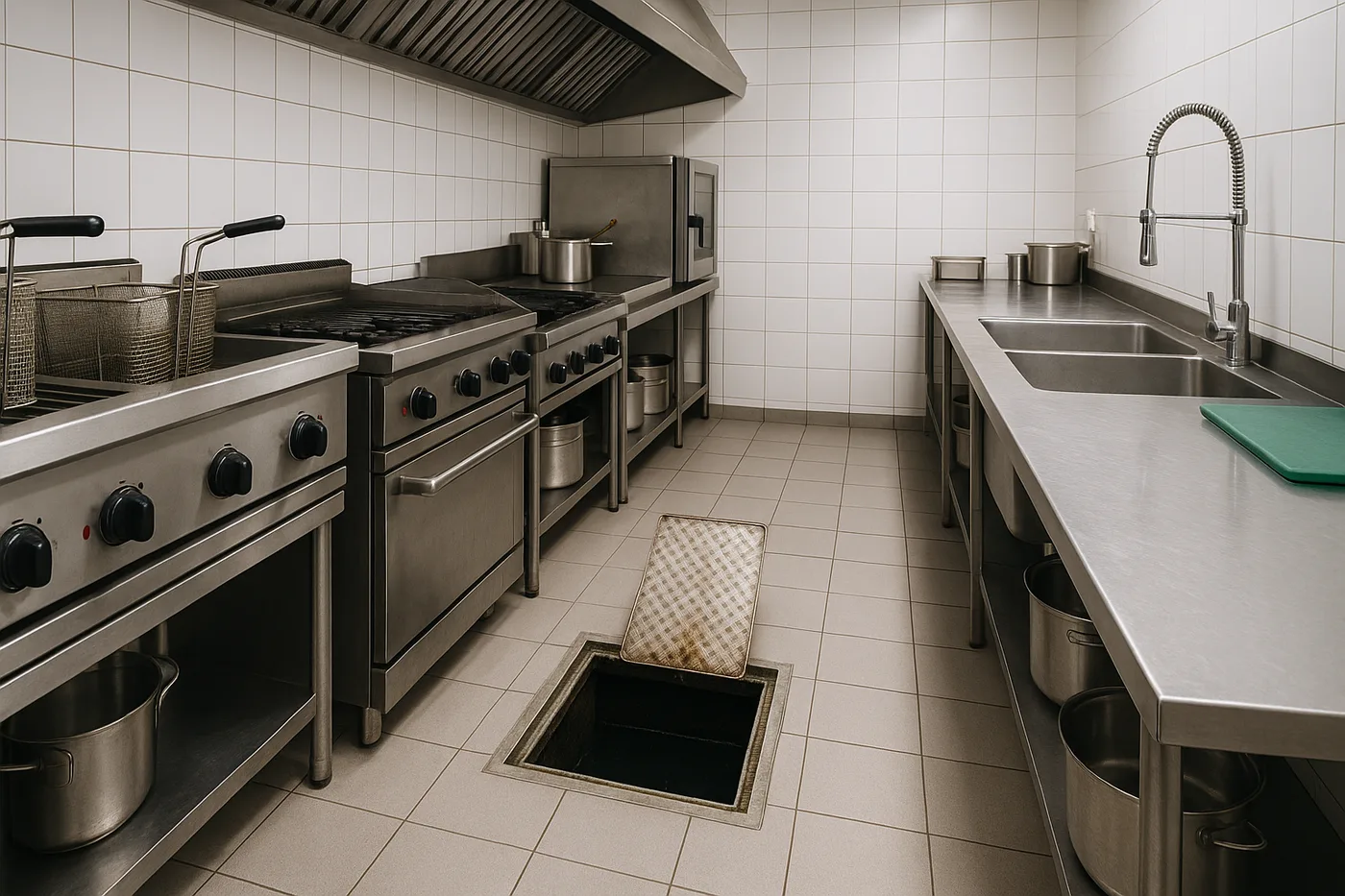
A grease trap is basically a big holding tank. The water comes in, and because oil is lighter than water, the grease floats to the top. The heavy food solids sink to the bottom. The water in the middle is pushed out through a baffle and into the municipal sewer system. But that layer of grease at the top just sits there, slowly growing thicker and thicker every single day. And living in Salt Lake City, our cold winters can actually make this process happen even faster in outdoor or poorly insulated traps, because the ambient temperature drops significantly, causing the grease to harden almost instantly.
The “Hot Water Will Fix It” Illusion
There is a really common myth floating around the restaurant industry. It is a mild contradiction that tricks a lot of smart kitchen managers. Hot water melts grease, right? So, running boiling water down the sinks for ten minutes should flush the pipes and clean the trap out. Makes sense logically. But actually, this is one of the worst things you can do.
When you run massive amounts of boiling water into the drain, you are absolutely melting the grease. But you are not destroying it. You are just liquefying the FOG in the trap, allowing it to bypass the baffles and flow directly into the city sewer lines. A few hundred feet down the pipe, where the water cools off, that grease hardens again. Over time, this creates massive clogs in the public sewer, which can lead to hefty fines from the city if they trace the blockage back to your restaurant.
Flushing with hot water doesn’t solve the problem; it just pushes it somewhere else. You have to remove the grease, not just melt it down the line.
Secrets from the Pros: Daily Routines That Actually Work
The secret to a clean grease trap doesn’t start with a giant pumping truck. It starts with your dishwashers and prep cooks. The less grease and food debris that goes down the drain in the first place, the longer your trap will function properly. You have to train your staff to change their daily habits.
Here are a few practical habits you need to implement right now:
- The dry wipe method: Scraping plates with a spatula is great, but it leaves a thin layer of sauce, butter, or dressing on the ceramic. Have your dish staff use a paper towel to dry-wipe heavily soiled plates and pans before they ever see a drop of water. It sounds tedious, but it saves hundreds of gallons of grease a year from entering your pipes.
- Use locking sink strainers: Traditional sink strainers often get pulled out by frustrated dishwashers when the water drains too slowly. Install locking strainers that only a manager has the key to. This forces the staff to dump the food debris into the trash where it belongs, rather than letting it wash down into the trap.
- Collect and recycle fryer oil: Never, ever let anyone dump fryer oil down a floor drain or sink. It seems obvious, but late at night, tired employees take shortcuts. Recycling your cooking oil is essential. You can actually get paid by companies that turn old fryer oil into biodiesel.
How Often Should You Really Empty This Thing?
This is probably the most common question restaurant owners ask. “How long can I put off pumping this out?” The honest answer depends on the volume of food you cook, the type of food you serve, and the physical size of your trap. A high-volume burger joint is going to fill a trap way faster than a small vegan bakery.
Professionals follow something called the 1/4 rule. Once your trap is one-quarter full of grease and solids, it stops being effective. When the FOG layer takes up 25 percent of the total liquid depth, grease starts slipping through the exit pipe. If you wait until the trap is completely full, you are already causing severe plumbing damage.
Here is a quick look at general timelines based on different restaurant setups:
| Restaurant Style | Trap Size / Volume | Estimated Pumping Frequency |
|---|---|---|
| Fast Food / High FOG | Small Indoor Trap (under sinks) | Every 2 to 4 weeks |
| Diner / Casual Dining | Medium Trap | Every 1 to 2 months |
| Coffee Shop / Bakery | Large Outdoor Interceptor | Every 3 to 6 months |
Keep in mind, these are just rough estimates. You have to monitor your specific equipment to find your rhythm.
Wait, What Does Hood Cleaning Have to Do With My Grease Trap?
You might be wondering why a company that specializes in cleaning Kitchen Exhaust hoods is talking about underground plumbing. Let me connect the dots for you, because this is a massive blind spot for a lot of operators.
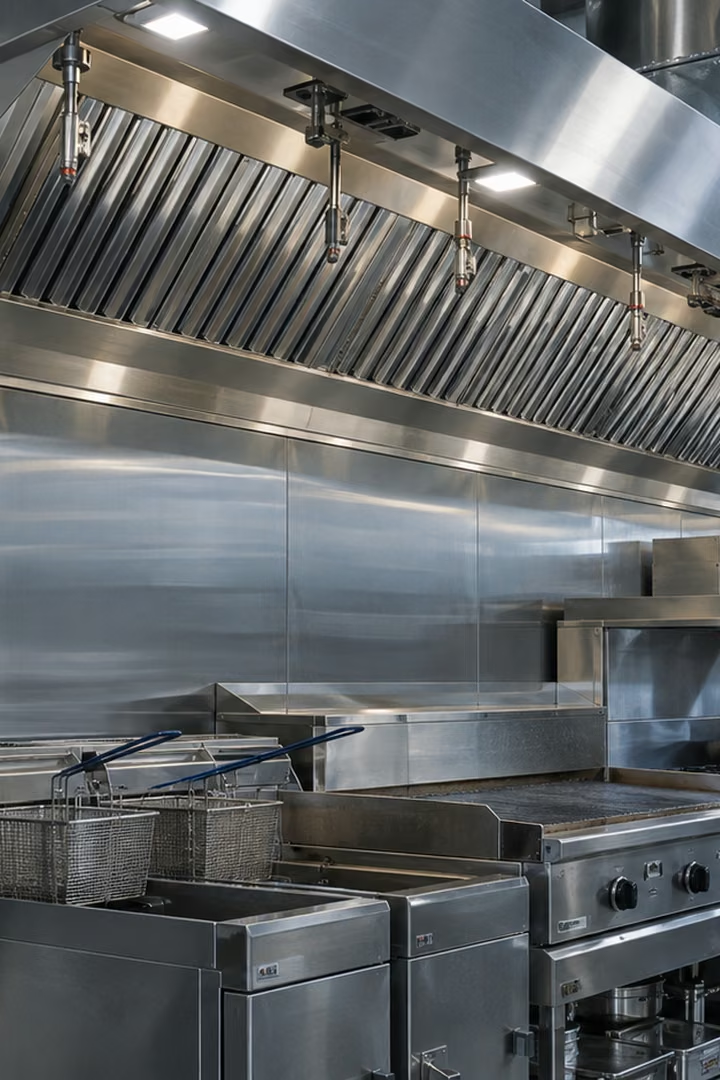
Grease in a commercial kitchen exists in two forms. There is plumbing grease, which goes down the drain, and there is airborne grease, which floats up as smoke and steam when you cook. Your kitchen Exhaust hood is designed to catch that airborne grease. But if your hood filters are clogged, or your ductwork hasn’t been professionally cleaned in months, that grease has nowhere to go.
Instead of being pulled outside, the airborne grease settles right back down onto your stainless steel prep tables, your walls, and mostly, your floors. It creates a slippery, hazardous mess. What happens at the end of the night? Your staff pulls out the mops and buckets, scrubs the floors with heavy-duty degreasers, and dumps all that dirty, grease-laden mop water straight down the floor drains.
Where do those floor drains go? Straight to your grease trap. If your kitchen Exhaust system is dirty, you are artificially filling up your grease trap much faster than necessary. By keeping your Kitchen Hoods professionally cleaned, you reduce the ambient grease in the kitchen, making floor cleanup easier and significantly reducing the heavy burden on your underground plumbing. It is a completely connected ecosystem. You really cannot ignore one without hurting the other.
Myths and Mistakes: Why Chemicals Aren’t the Answer
When drains start moving slowly, the immediate reaction of a panicked kitchen manager is to reach for the heavy-duty chemicals. Bleach, drain openers, and harsh solvents are usually the first line of defense. Please, step away from the bleach.
Harsh chemicals do not dissolve grease permanently. Much like the hot water issue, chemicals simply emulsify the FOG. They break the grease down just enough to pass through the trap, completely defeating the purpose of having a trap in the first place. Plus, these chemicals are highly corrosive and will eat away at the metal or plastic components of your plumbing system over time.
If you want to maintain your lines between professional pump-outs, you need to use bacterial enzymes. These are biological treatments that you pour down the drain at night. The bacteria actually eat the grease and organic waste, converting it into harmless water and carbon dioxide. It is not a quick fix for a clogged drain, but using enzymes regularly is an incredible maintenance habit that keeps the trap smelling fresh and the lines running clear.
The Smell Test and Other Silent Warning Signs
You never want to wait for water to back up onto the kitchen floor. By the time that happens, you are looking at emergency plumbing fees, potential closure by the health inspector, and thousands of dollars in lost revenue. You have to learn to read the subtle signs your kitchen gives you.
Pay close attention to your sinks. Do you hear a weird gurgling noise when the dishwasher drains? That gurgling means air is struggling to get through the pipes because grease is restricting the flow. Are you suddenly seeing an influx of fruit flies or drain flies near the wash stations? Those little pests breed in the rotting organic material stuck inside clogged pipes.
And then, there is the smell. A functioning grease trap shouldn’t really smell unless you open the lid. If a foul, rotten-egg odor starts creeping into your kitchen, or worse, drifting into the dining room near the restrooms, your trap is crying out for help. During the hot Salt Lake City summer months, those odors become highly volatile. The heat accelerates the decomposition of the food particles trapped in the grease, making the smell almost unbearable. Do not ignore these warnings.
DIY vs Professional: The Gross Reality
Every now and then, a restaurant owner will try to save a few bucks by having the newest busboy open the indoor grease trap and scoop out the top layer of fat with a bucket and a soup container. Honestly, this is a terrible idea for several reasons.
First, it is a biohazard. The smell alone is enough to clear out the entire kitchen, and if any of that sludge spills on the floor, it is almost impossible to clean up properly. Second, simply scooping the top layer of floating grease ignores the heavy, rotting food solids sitting at the bottom of the tank. If you do not clean out the bottom, the trap’s capacity is still severely reduced.
Professional grease trap pumping companies have heavy-duty vacuum trucks. They suck out the grease, remove the solid sludge, scrape the sides of the tank, and check the baffles to ensure everything is mechanically sound. Trying to do this yourself is literally throwing money down the drain, because you will eventually have to call a professional to fix the mess anyway.
Keeping Your Whole Kitchen Breathing Easy
Running a successful restaurant takes a massive amount of coordination. You have to balance food costs, staff schedules, and customer satisfaction all at the same time. The absolute last thing you need to worry about is the infrastructure of your building failing on you during a busy shift.
Maintaining your grease trap is all about consistency. Train your staff to scrape plates dry. Stop relying on boiling water and bleach to hide plumbing sins. Schedule regular pumping based on your specific kitchen volume, and remember that everything in your kitchen is connected. Keeping the air clean above the stoves drastically reduces the grease that ends up on the floors and in your plumbing.
If you take care of the hidden systems in your kitchen, they will quietly do their jobs, allowing you to focus on what you actually love doing: serving great food to the people of Salt Lake City. But if you neglect them, they will inevitably demand your attention in the most unpleasant ways possible.
Is your kitchen struggling with airborne grease that is making its way to your floors and drains? We can help keep your exhaust system spotless, reducing the overall grease load on your kitchen. Contact Utah Hood Cleaning today at 801-853-8155 to speak with our experts. Request a Free Quote and let us make sure your kitchen stays safe, clean, and fully operational.
Equipment instructions, system condition and applicable requirements matter. Do not treat general maintenance information as a substitute for an appropriately qualified provider’s assessment.
Explore commercial kitchen exhaust cleaning