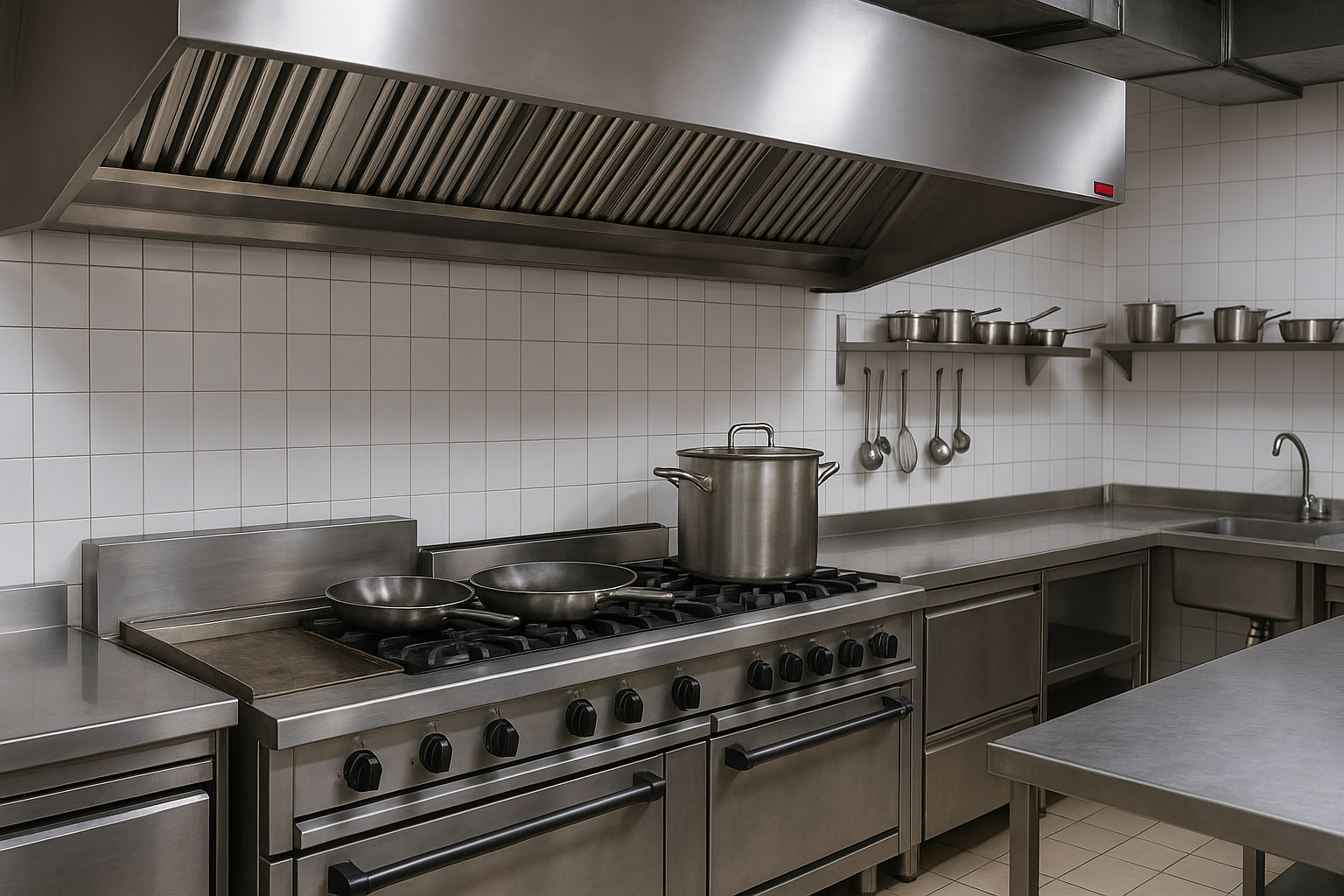
Let us be entirely real for a second. If you are running a busy dining establishment here in Salt Lake City, your mind is constantly pulled in a hundred different directions. You have staff calling in sick, food distributors running late, and a Friday night dinner rush that looks like a minor stampede. There is always something demanding your attention. With the sizzling grills and the constant shout of tickets, it is very easy to forget about the big metal canopy hanging right over your head.
You know what I am talking about. The Exhaust hood. It just sits up there, humming away, pulling smoke out of the kitchen so your cooks do not suffocate. We rarely give it a second thought until something goes wrong. Honestly, that out of sight, out of mind mentality is exactly what gets a lot of owners into serious trouble.
Kitchen hood safety standards are a massive deal. They really, really are. Ignoring them can literally shut your doors permanently. Grease is a tricky substance, and when it builds up, it becomes a severe hazard. Let me explain exactly what you need to be aware of to keep your kitchen safe, compliant, and open for business.
The Silent Enemy Hiding Above Your Stoves
Think about a typical night on the cooking line. You are searing steaks, frying up mountains of french fries, and grilling chicken. All of that cooking releases grease vapor into the air. It floats upward, right into your Commercial Kitchen Exhaust system.
Here is the thing about grease vapor. It does not just magically disappear once it gets sucked into the vent. As the hot vapor travels through the ductwork, it cools down. When it cools, it turns back into a liquid and sticks to the inside of the metal ducts. It coats the filters. It coats the fan on the roof. It literally covers everything. Over time, that sticky liquid solidifies into a thick, flammable sludge.
Have you ever tried to scrub baked grease off a frying pan? It is incredibly stubborn. Now imagine that same stubborn grime layered inches thick inside a dark, narrow tunnel spanning from your kitchen ceiling all the way up to the roof of your building. That is what we are dealing with. If a stray spark from the grill gets sucked up into that vent, that thick layer of grease can ignite instantly. Grease fires are absolutely terrifying because they spread fast and they burn extremely hot. This is exactly why kitchen Exhaust maintenance is not just a suggestion. It is a strict requirement.
Decoding the Big Rulebook (Looking at You, NFPA 96)
If you have been in the restaurant business for more than a minute, you have probably heard some jargon thrown around by the fire marshal. The biggest term you need to know is NFPA 96. It sounds like a weird sci-fi robot, but it is actually the standard set by the National Fire Protection Association. It is essentially the ultimate holy grail of kitchen hood safety rules.
This rulebook outlines exactly how your ventilation equipment should be installed, operated, and maintained to prevent fires. It dictates the specific NFPA 96 compliance schedules that every single commercial kitchen must follow. Local fire departments here in Salt Lake City rely heavily on these guidelines when they come in for their surprise inspections.
You might be wondering if this applies to your specific setup. The short answer is yes. Whether you run a tiny local cafe baking pastries or a massive downtown steakhouse cooking over an open flame, these rules apply to you. The requirements change depending on your cooking volume, but the fundamental safety principles remain exactly the same across the board. You have to keep the metal bare and grease free.
Wait, How Often Do We Actually Need to Do This?
This is probably the most common question we get asked. How frequently do you actually need to schedule a Salt Lake City hood cleaning service? Well, it depends entirely on what you are cooking and how often you are cooking it.
Some places need a deep scrub every few weeks, while others can safely go an entire year between visits. Let us break it down clearly. The chart below gives you a solid idea of what the fire codes expect from your establishment.
| Cooking Volume | Kitchen Type Example | Cleaning Frequency |
|---|---|---|
| Solid Fuel Cooking | Wood burning pizza ovens, charcoal grills | Every 1 Month |
| High Volume Cooking | 24 hour diners, busy fast food spots | Every 3 Months |
| Moderate Volume Cooking | Typical sit down restaurants, cafeterias | Every 6 Months |
| Low Volume Cooking | Churches, seasonal camps, daycares | Every 12 Months |
If you run a popular burger joint that is constantly frying up bacon and tossing patties on a flat top, you fall into the high volume category. You are going to need a professional cleaning every three months. That is just the reality of dealing with heavy animal fats. However, if you are managing a quiet church kitchen that only hosts pancake breakfasts twice a month, an annual visit is perfectly fine.
The key here is consistency. Slipping behind on this schedule is a huge gamble.
The Very Real Consequences of Skipping a Cycle
Let us talk about what happens when things slide. Running a business is expensive, and sometimes owners try to stretch their maintenance budgets by delaying a professional grease removal. That is incredibly risky behavior.
First of all, you have the local health inspectors and fire marshals to worry about. They are well aware of the safety standards. When a fire marshal walks into your kitchen, one of the very first things they look at is the service sticker on your hood. If that sticker is expired, they will look up into the filters. If they see heavy grease buildup, they have the authority to shut down your cooking line immediately. Imagine having to tell a dining room full of hungry guests that they have to leave because the kitchen is closed. It is a nightmare scenario for any owner.
Then, you have the insurance angle. Have you ever read the fine print on your commercial property insurance policy? You should probably take a look at it soon. Most policies contain very specific language about maintaining your exhaust system. If a fire breaks out in your kitchen and the insurance adjuster discovers you were severely behind on your cleaning schedule, they can flat out deny your claim. They will argue that the fire was preventable. You could lose the entire business and be stuck with the bill.
Anatomy of a Proper, Thorough Scrub Down
You might be surprised to learn what actually goes into a compliant cleaning job. It is not just wiping down the shiny stainless steel right above the cooking line. That is a massive misconception.
A legitimate restaurant hood cleaning involves going deep into the belly of the system. The NFPA 96 dictates that the entire system must be cleaned down to the bare metal. This means the crew has to remove the baffle filters and soak them. They have to physically scrape the thick, hardened grease out of the ductwork. They use specialized tools, high pressure hot water, and heavy duty chemical degreasers to melt the sludge away.
The whole entire system needs attention. That includes the canopy itself, the filters, the vertical ductwork, the horizontal ductwork, and the exhaust fan sitting up on the roof. Yes, the roof. We will get to that in a moment.
You know what really grinds my gears? When a sketchy contractor comes in, polishes the visible part of the canopy to make it look nice, slaps a compliance sticker on the front, and leaves the ductwork completely black. That is called the shiny hood trick. It happens way too often. As an owner, you have to demand photographic proof of the bare metal inside the ducts. A reputable company will always provide before and after pictures of the entire process.
Do Not Forget About the Roof (Seriously, People Forget)
Out of sight, out of mind, right? Well, not quite. The exhaust fan up on the roof does all the heavy lifting. It physically pulls the contaminated air out of your building. Because it handles so much vapor, the fan blades and the housing get absolutely caked in thick grease over time.
If that fan gets too heavy with sludge, the motor has to work twice as hard to spin the blades. Eventually, the motor will just burn out. Replacing a commercial exhaust fan motor is significantly more expensive than simply paying for a routine cleaning.
Furthermore, there is a major environmental concern hiding up there. If grease builds up heavily on the fan, it can eventually leak out and pool onto your roofing material. Here in Utah, we get plenty of snow in the winter and rain in the spring. When precipitation mixes with that grease puddle, it washes down the side of your building and flows right into the storm drains. The city takes environmental runoff very seriously, and the fines for contaminating the local water supply with restaurant grease are incredibly steep. Plus, animal fats eat away at rubber roofing membranes, causing leaks that drip straight back down into your dining room. It is just a massive headache waiting to happen.
Beyond Fire Prevention: Keeping the Air Breathable
While avoiding a catastrophic fire is obviously the primary goal of these safety standards, there is another huge benefit to staying compliant. It heavily impacts the daily work environment for your staff.
Have you ever walked into a kitchen and noticed that the air feels incredibly heavy? Maybe your eyes sting a little bit, or the whole room smells like old cooking oil. That is a clear sign that the exhaust system is choking. When the ducts are clogged with grease, the fan cannot pull enough air through the filters. The smoke simply hits the blockage and rolls right back out into the kitchen.
Working in a smoky, poorly ventilated space is exhausting for your employees. The temperature rises rapidly. People get sluggish, irritable, and prone to making mistakes. Moreover, that floating grease vapor eventually drifts out of the kitchen and settles onto the tables in your dining area. Your customers will absolutely notice if their menus feel sticky.
By keeping the system clear and adhering to the kitchen ventilation safety rules, you allow the equipment to breathe properly. Your air conditioning unit will not have to work nearly as hard to cool the building, which actually saves you money on utility bills. It is a win for your budget, a win for your employees, and a massive win for your customer experience.
Spotting the Warning Signs Before Disaster Strikes
So, how do you know if you are currently falling behind on these standards? You do not need to be a certified fire inspector to spot the obvious red flags. You just need to know what to look for.
Take a walk into your kitchen and simply look up at the metal canopy. Are there brown grease drips forming along the bottom edge? That is a terrible sign. It means the system is so full of liquid fat that it is literally overflowing. Another obvious warning sign is the sound of your exhaust fan. It should have a steady, smooth hum. If you hear it rattling violently or grinding, the fan blades are likely unbalanced due to heavy, uneven grease buildup.
Finally, check your filters. If you take a baffle Filter down and you cannot see light shining through the slats, it is completely blocked. Air cannot pass through a solid wall of grime. When you notice these things happening, you need to act fast. Waiting for your next scheduled health inspection to address the problem is like playing roulette with your livelihood.
Staying ahead of the curve is just a smart business habit. Keeping accurate records of your past cleanings, holding onto the photographic evidence from your contractor, and understanding exactly what the NFPA 96 requires will make your life significantly easier. When the fire marshal finally does walk through your back door with his clipboard, you will not feel a drop of panic. You will know confidently that your system is completely secure.
Wrapping Things Up with Utah Hood Cleaning
Running a successful restaurant takes a massive amount of hard work and dedication. You already have enough on your plate without worrying about a grease fire shutting you down. Handling these strict safety standards is exactly what we do best.
If your exhaust system is due for a thorough scrub, we are absolutely ready to assist you. Reach out to Utah Hood Cleaning today at 801-853-8155 to schedule your next service with our experienced crew. It only takes a quick minute to Request a Free Quote, giving you total peace of mind for your upcoming inspections.