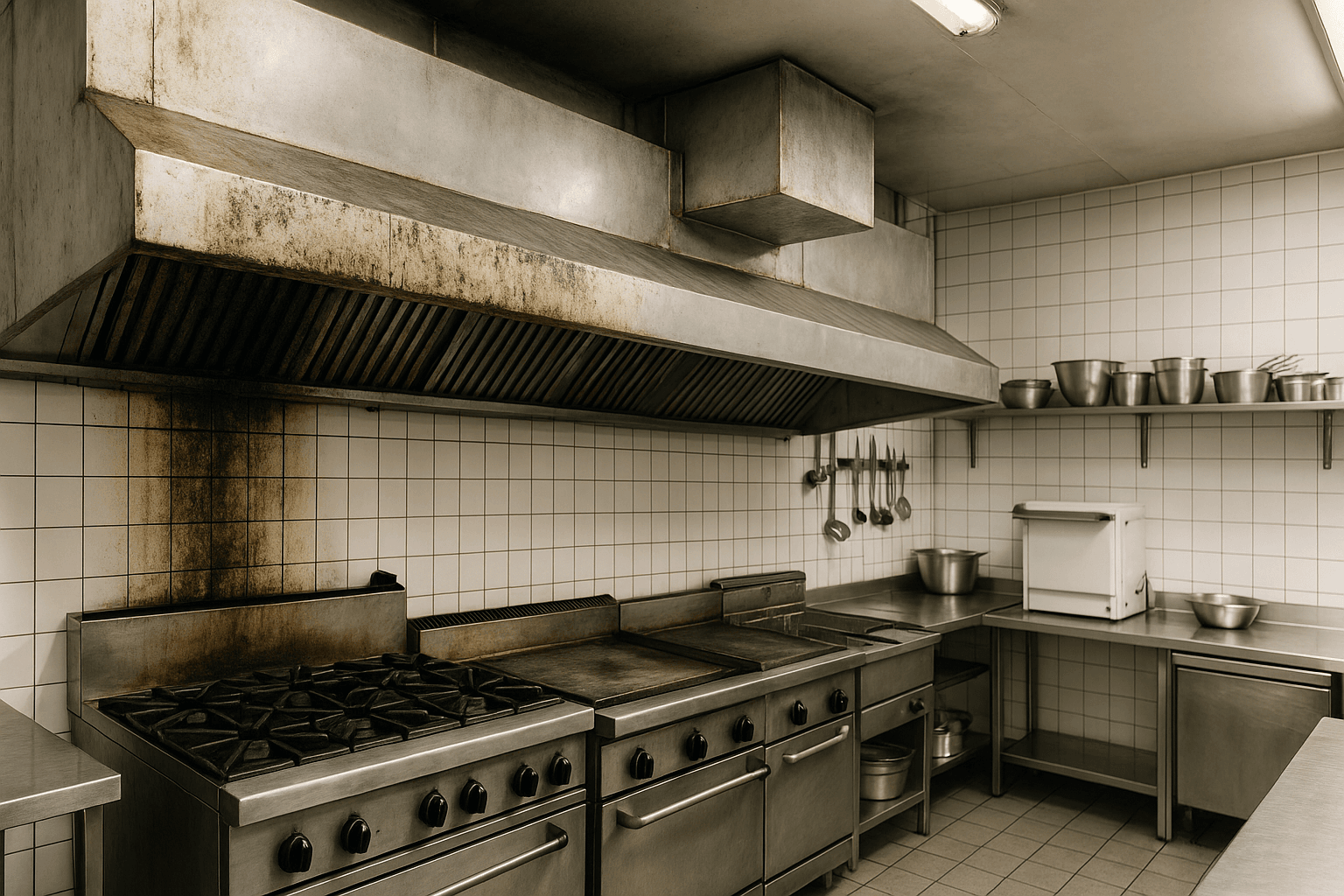
Let’s be real for a second. If you run a restaurant in Salt Lake City, you know that the kitchen is a chaotic, beautiful mess. It’s a symphony of clanging pans, shouting line cooks, and the relentless heat of the broiler. But there is a silent, sticky enemy lurking right above your head. Yep, we are talking about the Exhaust hood. It sits there, day in and day out, sucking up smoke, steam, and—most importantly—Grease. It’s easy to ignore it when the dinner rush hits and you’re down a server, but ignoring it is a dangerous game. Eventually, you have to face the music. And when that time comes, you’re faced with a classic dilemma: do you grab a ladder and a scraper to do it yourself, or do you call in the pros?
You might be looking at your P&L statement right now, thinking, “How hard can it be? It’s just cleaning, right?” Honestly, I get it. The margins in this industry are razor-thin. Saving a few hundred bucks seems like a no-brainer. But here’s the thing—Commercial Kitchen Hood Cleaning isn’t like wiping down the prep tables at the end of a shift. It is a completely different beast. It’s the difference between washing your car in the driveway and rebuilding the transmission. One makes it look nice; the other keeps it from exploding.
There is a lot of noise out there about what’s required, what’s legal, and what’s just a suggestion. So, let’s walk through this together. We aren’t going to bore you with a textbook lecture. We are just going to look at the facts, the risks, and the reality of keeping a kitchen safe in Utah.
The DIY Trap: Why It Looks So Appealing
We have all been there. It’s 2 AM on a Tuesday, the kitchen is finally quiet, and you notice a drip of grease on the side of the hood. You think, “I’ll just get the guys to scrub this down next week.” It feels empowering to handle things in-house. It’s that entrepreneurial spirit—the idea that no one cares about your business as much as you do.
And strictly speaking, on the surface level, you *can* clean parts of your hood. Your staff probably runs the baffle filters through the dishwasher every night (or at least, they should be). You might wipe down the exterior stainless steel so it shines for the health inspector. That’s all good. That is maintenance.
But here is where it gets tricky. That visible shine is often fool’s gold. The real danger isn’t the grease you can see; it’s the grease you can’t. It’s the sludge accumulating deep in the ductwork, twisting and turning its way up through the ceiling and settling in the fan bowl on the roof. When you decide to take the DIY route for the deep cleaning, you are essentially signing up for a job that requires specialized tools, harsh chemicals, and a level of physical gymnastics that most line cooks aren’t qualified for.
Plus, let’s talk about your staff for a moment. You hire them to cook incredible food, not to rappel down a grease duct. Asking your team to handle heavy-duty degreasing is a surefire way to kill morale. Nobody, and I mean nobody, wants to go home smelling like old fryer oil that’s been baking in a vent for three months. It’s a messy, thankless job.
The NFPA 96 Code: The Law of the Land
Okay, I promised not to get too technical, but we have to touch on this because it’s vital. In the world of commercial kitchens, the NFPA 96 is basically the Bible. It stands for the National Fire Protection Association’s standard for ventilation control and fire protection. In Salt Lake City, and pretty much everywhere else, fire marshals and insurance adjusters treat this code as law.
The code doesn’t just say “keep it clean.” It specifies how clean. We are talking about cleaning down to the bare metal. Not “looks okay” clean, but “zero combustible fuel left” clean. When a professional crew comes in, they are adhering to these standards. They document the cleanliness with photos, they measure the grease depth, and they apply a certification sticker that proves to the Fire Marshal that the system is compliant.
If you do it yourself, who certifies it? You? That creates a massive conflict of interest—and more importantly, a liability black hole. If, heaven forbid, a fire breaks out in your ductwork, the first thing the insurance investigator will ask for is your cleaning records. If you say, “My cousin Vinny scrubbed it last month,” they are likely to deny your claim. Just like that. Your coverage could vanish because there is no third-party verification that the job was done according to code.
The Hidden Costs of DIY Cleaning
Let’s circle back to money. You want to save cash. But have you actually crunched the numbers on what a proper DIY job costs? It’s not just a bottle of spray cleaner and a sponge.
- Chemical Costs: To cut through polymerized grease—that hard, amber-colored stuff that looks like glue—you need industrial-strength degreasers. This stuff isn’t cheap, and it’s dangerous if you don’t know how to handle it.
- Equipment Rental: You need a high-pressure washer, preferably one that heats water to high temperatures. Cold water just pushes grease around; hot water melts it. Renting a commercial-grade hot water pressure washer isn’t pocket change.
- Personal Protective Equipment (PPE): You need respirators, heavy-duty gloves, goggles, and protective suits. Chemical burns are real, and grease falling into your eyes is a nightmare scenario.
- Labor Hours: To do this right, it takes time. A lot of time. If you’re paying your staff overtime to clean the hood, are you really saving money compared to a flat fee from a pro service?
There is also the cost of mistakes. We have seen restaurant owners try to pressure wash their hoods and accidentally flood their fryers with greasy water because they didn’t wrap the equipment properly. Or worse, they blast water into the fan motor on the roof and short out the electrical system. Suddenly, that “free” cleaning job cost you $2,000 in repairs and a closed kitchen on a Saturday night.
The Professional Advantage: What We Actually Do
So, what happens when you hire a company like Utah Hood Cleaning? It’s a bit of a production, honestly. It’s tactical.
First off, we protect your kitchen. We treat your equipment like it’s expensive—because it is. We wrap the ranges, fryers, and prep tables in heavy plastic. We set up funnels and catch-basins to ensure that the dissolved grease and water have somewhere to go other than your floor drains. Grease in the city sewer system is a huge no-no, and the fines in Salt Lake can be steep if you’re caught dumping sludge down the drain.
Then comes the cleaning. We start from the top down. We go up to the roof (rain, snow, or shine—and in Utah, it’s usually snow or blazing sun). We hinge open the Exhaust fan and clean the blades. An unbalanced fan caused by uneven grease buildup can vibrate so hard it shakes the roof structure or burns out the motor. We clean the bowl, the trap, and the vertical ductwork.
Then we move inside. We scrape the heavy buildup manually. Then we apply a foaming caustic chemical that breaks down the grease on a molecular level. After it dwells, we blast it with 3,000 PSI of boiling hot water. It’s incredibly satisfying to watch, actually. The metal goes from black and sticky to shiny silver.
But the most important part? The cleanup. When we leave, your kitchen should look cleaner than when we arrived. We polish the hood exterior, mop the floors, and leave that certification sticker on the hood canopy. That sticker is your shield. It tells the health inspector and the fire marshal, “We take safety seriously here.”
Comparing the Options
Sometimes it helps to see things laid out side-by-side. It makes the decision clearer.
| Feature | DIY Cleaning | Professional Service |
|---|---|---|
| Cost | Low upfront, hidden long-term costs (labor, chemicals, risk). | Fixed upfront cost, predictable budgeting. |
| Depth of Clean | Surface level only. Reach is limited by tools. | Bare metal clean. Full duct and fan access. |
| Liability | High. Insurance may void claims for fires. | Low. Certified proof of compliance (NFPA 96). |
| Equipment Safety | Risk of damage to fans or electrical systems. | Professional protection and handling. |
| Time Required | Takes hours or days of staff time. | Done efficiently after hours; zero downtime. |
The Utah Factor: Why Local Matters
You might wonder if geography makes a difference. In Salt Lake City, it kind of does. Our climate is dry, but our kitchens are busy. We have a booming food scene here, from high-end dining downtown to the mom-and-pop joints in Sugar House. The competition is stiff. You cannot afford to be shut down for a violation.
Furthermore, local inspectors know the local companies. When they see a certification from a reputable local provider, there is a level of trust there. They know the standards we adhere to. If you are doing it yourself, be prepared for a much longer, more scrutiny-filled inspection. They are going to get out the flashlight and the mirror, and they are going to look for reasons to cite you.
Also, think about your roof. In Utah, we get heavy snow loads and intense summer UV rays. If your roof fan is leaking grease onto the roof membrane (which happens when the catch tray overflows because it wasn’t cleaned), that grease eats through the rubber roofing material. Next thing you know, you have a roof leak right over the dining room. A professional cleaner checks that rooftop Containment every single time.
When Is DIY Actually Okay?
I don’t want to sound like you can never touch a rag. There are absolutely times when DIY is appropriate. You should be doing daily maintenance. In fact, we love it when our clients do this because it makes the deep clean better.
Here is what you should be doing yourself:
1. The Baffle Filters: Take them down nightly or weekly. Run them through the dishwasher. If they are clogged, the smoke stays in the kitchen, and your cooks will hate you.
2. The Exterior: Wipe down the outside of the hood (the part the customers can see if you have an open kitchen). Keep it shiny.
3. The Drip Trays: Empty the little grease cups under the filters. Don’t let them overflow.
But that’s where the line is drawn. Once you need a screwdriver, a ladder, or a pressure washer, you are crossing into professional territory. It’s like plumbing. You can plunge your own toilet, but you don’t dig up the main sewer line in your front yard, right?
Peace of Mind is Priceless
Running a restaurant is stressful enough. You worry about food costs, Yelp reviews, staff showing up on time, and the refrigerator compressor making that weird noise again. Do you really want to add “potential grease fire” to that list?
Hiring a professional service isn’t just about cleaning; it’s about risk management. It’s about sleeping better at night knowing that the most dangerous part of your kitchen has been neutralized. It’s about knowing that if an inspector walks in five minutes before lunch service, you can point to the sticker on the hood and say, “Go ahead, look. We’re good.”
There is a specific feeling you get when you walk into your kitchen the morning after a professional clean. The air feels lighter. The fans sound smoother. The stainless steel reflects the pilot lights. It’s a fresh start. And honestly? It just looks professional. Your kitchen staff notices it, too. When you invest in the facility, they take more pride in their work. It’s a subtle psychological shift, but it’s real.
The Verdict
So, Professional vs. DIY? If you are talking about a full system clean—fan, duct, and hood—the answer is pretty clear. The risks of doing it yourself far outweigh the savings. Between the fire hazards, the insurance liabilities, the equipment costs, and the sheer gross-out factor of handling sludge, it’s a job best left to the experts.
You stick to making the best food in Salt Lake City. Let the experts handle the grease. It’s safer, it’s cleaner, and in the long run, it’s usually cheaper than the catastrophe waiting to happen with a DIY job.
If you’re noticing that your hood isn’t drawing smoke like it used to, or if you can’t remember the last time someone was up on the roof to check the fan, it’s probably time to make a move. Don’t wait for the fire inspector to force your hand.
If you are ready to take one major headache off your plate and ensure your kitchen is safe, compliant, and sparkling clean, give us a shout. You can reach Utah Hood Cleaning at 801-853-8155 to schedule an inspection. Or, if you prefer, simply Request a Free Quote online and we will get the ball rolling.