Let’s be real for a second. If you are managing a restaurant in Salt Lake City, you already have about a thousand things on your plate. You’re worrying about food costs, staffing shortages, and whether that Yelp review from last night is going to tank your weekend rush. The last thing you probably want to think about is the sticky, greasy mess hiding inside your kitchen’s Exhaust system.
But here’s the thing—you have to. It’s not just about avoiding a stern talking-to from the fire marshal or passing your next health inspection (though those are huge). It is about keeping your doors open and your people safe. We’ve all seen the news stories of restaurants catching fire because of Grease buildup, and honestly? It’s a nightmare that is entirely preventable.
So, we aren’t going to bore you with a dry manual. Instead, we’re going to walk through a Commercial hood Exhaust cleaning checklist that actually makes sense. Think of this as your cheat sheet. Whether you are vetting a new cleaning company or just want to make sure your current guys are actually doing their job, this is what you need to know.
Why Is This Even a Big Deal?
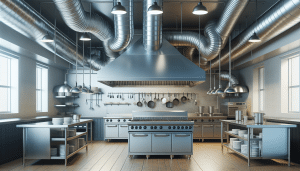
You might be thinking, “Can’t I just wipe down the hood and call it a day?” I wish it were that simple. The hood—the part you can see—is just the tip of the iceberg. The real danger lives where you can’t see: up in the ducts and all the way to the exhaust fan on the roof.
Grease is fuel. It’s that simple. In the dry Utah climate, things can spark up faster than you’d expect. When cooking vapors travel up your system, they cool down and turn into sludge. Over time, that sludge becomes a thick, flammable layer. If a flare-up on the grill gets a little too high and that flame gets sucked into the duct… well, you see where I’m going with this.
This is why the NFPA 96 standards exist. It’s not just bureaucratic red tape; it’s the playbook for fire safety in commercial kitchens. A proper cleaning doesn’t just make things look shiny; it removes the fuel source entirely.
The Pre-Cleaning Phase: Preparing the Battleground
Before a drop of chemical hits the metal, there is some prep work that needs to happen. If your Hood Cleaners just walk in and start spraying, you’re in for a bad time. You don’t want degreaser getting in your fryer oil or landing on your prep tables.
Here is what a professional setup should look like:
- Kitchen Protection: All cooking equipment, fryers, and prep surfaces should be covered with plastic sheeting. We are talking tight seals here. You don’t want contaminated water dripping onto your grill.
- Pilot Lights: All pilot lights need to be turned off. It sounds obvious, but you’d be surprised how often this gets missed. Mixing flammable chemicals with an open flame is a recipe for disaster.
- Grease Management: Where is the grease going to go? The cleaners should have a plan to capture the runoff. Usually, this involves setting up funnels and barrels to catch the dissolved grease so it doesn’t go down your floor drains.
If you see a crew come in without plastic sheeting, honestly, you should probably ask them to leave. Protecting your equipment is just as important as cleaning the hood.
The Hood and Filters: Where the Action Starts
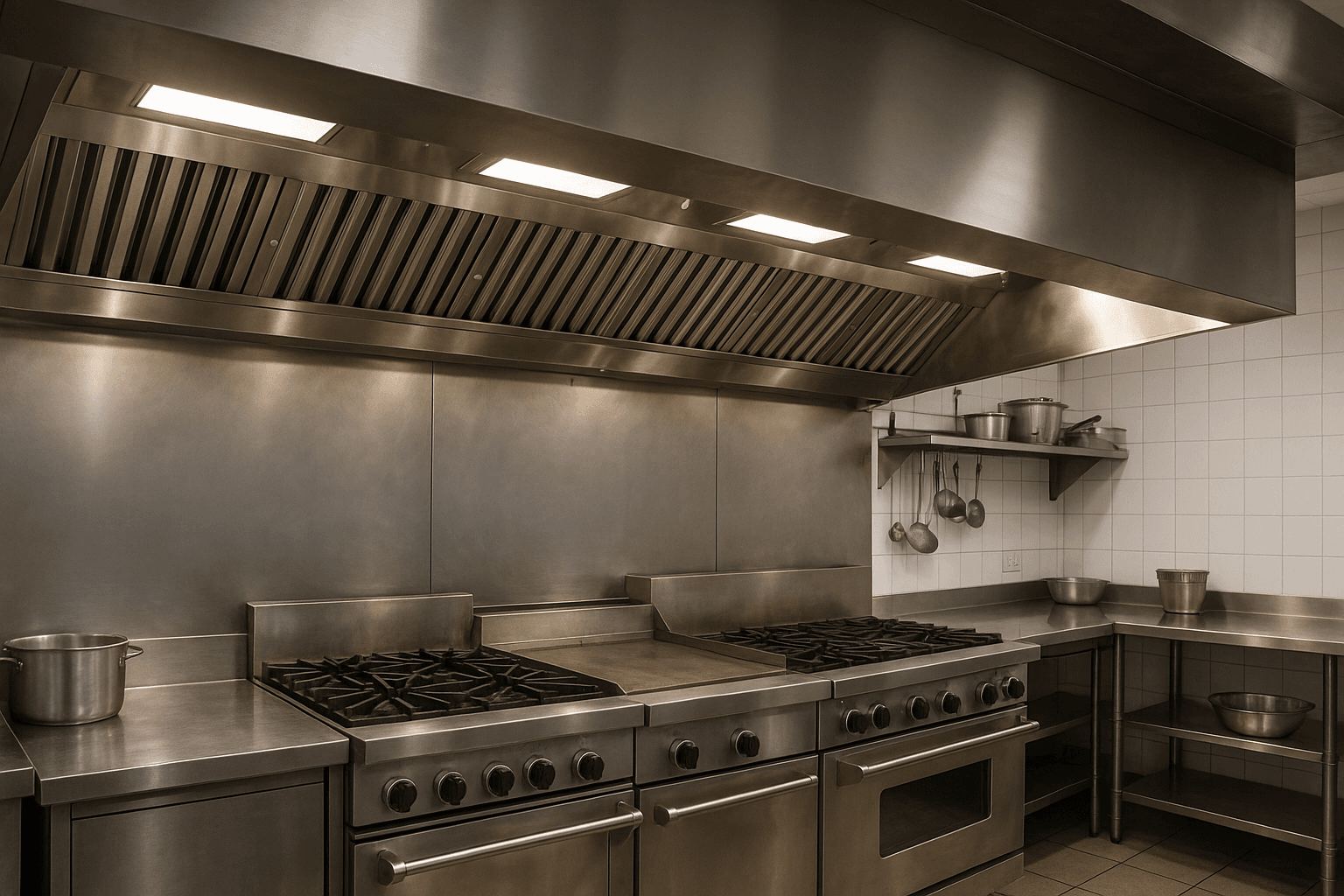
Okay, let’s get into the nitty-gritty. The hood canopy and the filters are the first line of defense. They catch the bulk of the heavy grease before it travels up the ductwork.
Filters are a funny thing. Most restaurants run them through the dishwasher every night. That’s great for the surface, but a dishwasher rarely gets the grease that’s baked inside the baffles. During a professional cleaning, those filters should be removed and soaked in a strong caustic solution or pressure washed separately to get them down to bare metal.
And when we say “bare metal,” we mean it. If you run your finger along the inside of the hood after a cleaning and it comes back sticky, the job isn’t done. The plenum area—that space right behind the filters—is a notorious hiding spot for grease. It needs to be scraped and pressure washed thoroughly.
The Ductwork: The Invisible Danger
This is the part that keeps me up at night. The ductwork is the tunnel that connects your kitchen to the roof. It twists and turns, and every bend is a place where grease likes to pool.
A lot of “budget” hood cleaners will clean the hood and the fan but skip the ductwork because it’s hard to reach. That is what we in the industry call “cleaning the smile.” It looks good to the chef standing in the kitchen, but the building could still be a fire trap.
Your checklist for the ducts should include:
- Access Panels: Does your ductwork have enough access panels? If the duct is fifty feet long and has two 90-degree turns, you can’t clean it all from the ends. You might need access doors installed to reach the middle sections.
- Scraping First: If the buildup is thick, pressure washing alone won’t cut it. The grease needs to be manually scraped first. It’s hard, messy work, but it’s necessary.
- Vertical vs. Horizontal: Vertical ducts are easier because gravity helps. Horizontal ducts are where grease sits and stagnates. These areas need extra attention.
You know what? Next time your cleaners are there, ask them how they clean the horizontal runs. If they stumble on the answer, that’s a red flag.
The Rooftop Fan: The Heart of the System
Now, let’s head up to the roof. In Salt Lake City, the rooftops can get pretty hot in the summer and freezing in the winter, which affects how grease behaves. The exhaust fan is the engine that pulls the smoke out, and it takes a beating.
Here is the kicker: cleaning the fan isn’t just about the blades. Sure, the blades need to be balanced and clean so the fan doesn’t wobble and vibrate your ceiling tiles loose. But you also need to check the grease Containment system.
The Hinge Kit Necessity
Does your fan have a hinge kit? If not, how are the cleaners getting underneath it? A hinge kit allows the fan to be tipped back safely so the duct underneath can be cleaned. Without one, cleaners have to lift the heavy fan off entirely (which is dangerous and damages the seal) or they just… don’t clean under it.
You really need a hinge kit. It’s a small investment that saves your roof and ensures a better clean.
Frequency: How Often Should You Be Doing This?
This is the most common question we get. “Do I really need to do this every three months?” The answer is: it depends. It depends on what you are cooking and how much of it you are slinging.
A steakhouse charbroiling meats over an open flame creates a very different type of grease than a nursing home steaming vegetables. The NFPA has specific guidelines for this.
| Type of Cooking Operation | Recommended Frequency | Why? |
|---|---|---|
| Solid Fuel (Wood/Charcoal) | Monthly | High creosote buildup; extreme fire risk. |
| High-Volume (24-hour, Wok, Charbroiling) | Quarterly | Heavy grease load requires frequent maintenance. |
| Moderate Volume (Standard Restaurant) | Semi-Annually | Standard accumulation rates. |
| Low Volume (Camps, Daycares, Churches) | Annually | Seasonal or light use. |
Most full-service restaurants in Salt Lake City fall into the quarterly category. Stick to the schedule. If you let it slide, the grease hardens, becomes harder to remove, and creates a bigger fire hazard.
The Post-Cleaning Verification: Trust but Verify
The crew packs up, hands you an invoice, and drives off. How do you know they did a good job? You aren’t going to crawl into the ductwork yourself (please don’t do that).
Professional hood cleaners should provide you with a Post-Cleaning Report. This isn’t just a receipt. It should include photos—lots of them. You want “before” and “after” shots of the hood, the filters, the ductwork, and the fan on the roof.
If they don’t offer photos, be suspicious. In this digital age, it takes two seconds to snap a picture on a phone. Proof of work is essential for your insurance carrier, too. If there is ever a fire, the first thing the insurance adjuster will ask for is proof that you maintained the system.
Also, check for the compliance sticker. This should be placed on the hood, showing the date of cleaning and the next service date. The fire marshal looks for this immediately when they walk in. No sticker? Big problem.
Polish and Shine: The Finishing Touches
While safety is the priority, aesthetics matter too. You want your kitchen to look sharp. After the heavy duty cleaning is done, the crew should polish the stainless steel hood.
This does two things. First, it makes your kitchen look professional. Second, the polish actually acts as a bit of a barrier, making it easier to wipe down the exterior during your daily cleaning. A streaky, dull hood just looks sad, you know?
And let’s not forget the cleanup. The floor shouldn’t be slippery. The prep tables should be wiped down. The kitchen should be left in the same condition (or better) than when they arrived. There is nothing worse than opening the restaurant in the morning and finding a puddle of grease on the floor.
Common Mistakes Restaurants Make
We see a lot of kitchens in SLC, and we see the same mistakes over and over. Let’s cover a few so you can avoid them.
Using General Cleaners for Hoods:
You might have a great janitorial crew, but they are not equipped for hood cleaning. They lack the high-pressure hot water units and the specific chemicals needed to break down carbonized grease. It’s like asking your dentist to fix your car engine. Different tools, different skills.
Ignoring the Roof:
We mentioned this before, but it bears repeating. Grease that leaks from the fan onto the roof eats through the roofing membrane. Roof repairs are expensive. A simple grease containment box (often called a “grease hog”) can save you thousands in roof damage.
Waiting Too Long:
“We’ll do it next month.” We hear this all the time. But grease doesn’t take a break. It builds up every single time you turn on that fryer. Delaying cleaning puts strain on your fan motor, causing it to burn out faster. It’s cheaper to clean the system than to replace a blown motor and a fan belt.
The “Local” Factor: Salt Lake City Quirks
Living and working in Utah presents some unique challenges for Kitchen Exhaust systems. Our air is dry and dusty. That dust mixes with the grease to form a concrete-like substance that is incredibly hard to remove if left too long.
Plus, we have distinct seasonal shifts. In the winter, the temperature difference between the hot grease air and the freezing outside air causes rapid condensation in the ducts. This means you might see more grease runoff in the winter months. Being aware of these local environmental factors helps you stay ahead of the curve.
Also, keep in mind that local fire marshals in the Salt Lake Valley are very thorough. They know what to look for. They know the difference between a hood that’s been wiped down and a system that has been cleaned to NFPA 96 standards. Don’t try to pull a fast one on them.
How to Choose the Right Partner
So, you’re ready to hire a pro. What should you look for?
First, check for certification. Are they certified technicians? Do they carry adequate liability insurance? If a cleaner damages your roof or sets off your Ansul system by accident, you need to know they have the coverage to fix it.
Second, ask about their process. Do they use hot water pressure washers? Cold water just doesn’t cut through heavy grease effectively. Do they take photos? Do they clean the entire system or just the hood?
And finally, trust your gut. If a quote seems too good to be true, it probably is. Proper hood cleaning is labor-intensive and requires expensive equipment. A super low price usually means corners are being cut.
Keeping your commercial kitchen safe and compliant doesn’t have to be a headache. By following this checklist and staying on top of your schedule, you can focus on what you do best—serving up amazing food to the people of Salt Lake City. Don’t let a greasy duct ruin everything you’ve worked so hard to build. Safety is a choice you make every day.
If you are looking for a team that understands the ins and outs of Utah kitchens and treats your business with the respect it deserves, we’d love to help. We get down to the bare metal every single time. Call us today at 801-853-8155 or click here to Request a Free Quote. Let’s keep your kitchen running safe and clean.