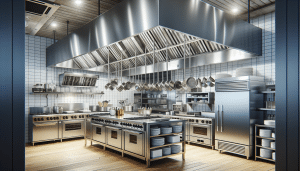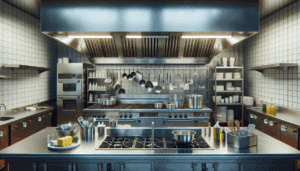
If you run a Commercial kitchen in Salt Lake City, you know the feeling. It’s Friday night, the tickets are printing faster than you can read them, and the heat on the line is absolutely brutal. You’re worried about food costs, staff showing up on time, and whether that new line cook is going to burn the steaks again. Honestly, the last thing on your mind is what’s happening up inside the dark, metal tunnels above your stove.
But here’s the thing—what you can’t see can actually hurt you. And I don’t just mean a slap on the wrist from the health inspector. I’m talking about the kind of Grease buildup that turns a small flare-up into a catastrophic fire. It happens more often than people think.
Most restaurant owners view hood cleaning as just another annoying expense, like paying for trash pickup or fixing the ice machine. But there is a massive difference between a guy with a rag giving your hood a quick wipe-down and a professional deep Kitchen Hood Cleaning service. One makes things look shiny for a day; the other keeps your building standing.
Let’s take a walk through what actually happens during a deep clean, why the “bare metal” standard matters, and why skipping this could cost you everything.
It’s Not Just About the Shiny Part
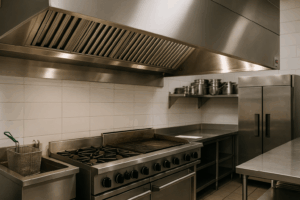
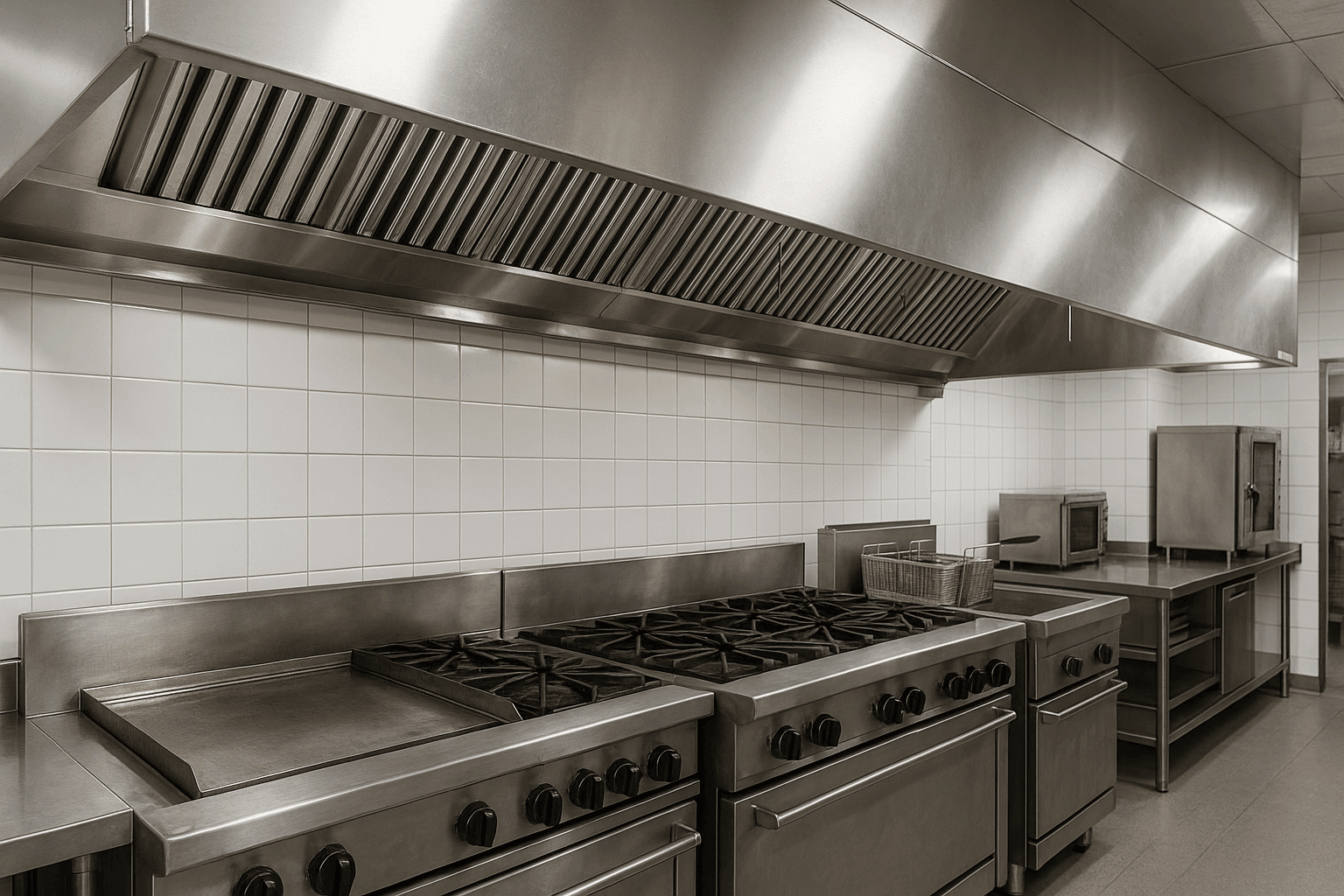
When you walk into your kitchen in the morning, you look at the stainless steel canopy over the range. If it’s shiny, you assume it’s clean, right? That’s a pretty normal assumption. But that canopy is just the tip of the iceberg. It’s the aesthetic part. The real work—the dangerous work—is happening where you can’t see it.
A true deep cleaning service goes way beyond the hood. We are talking about a complete system cleaning. This includes the baffle filters, the plenum (that area right behind the filters where grease likes to pool), the vertical and horizontal ductwork, and finally, the Exhaust fan up on the roof.
You know what happens when you only clean the canopy? You create a fire fuse. The hood looks great, but the ductwork acts like a grease-lined chimney. If a flame jumps up from a sauté pan, it bypasses the clean hood and ignites the fuel inside the duct. Once that fire gets pulled up by the fan, it’s in the roof structure in seconds. That is why NFPA 96 standards exist.
So, when we talk about “what’s included,” we mean everything from the cooktop to the rooftop. If a cleaning crew leaves your place without setting foot on the roof, they didn’t clean your hood. They just polished your furniture.
The Rooftop Fan: Out of Sight, Out of Mind
Let’s talk about the roof for a second. It’s probably the most neglected part of any restaurant in Utah. In the winter, it’s freezing up there; in the summer, the sun beats down on that tar roof like an oven. But that Exhaust fan is the heart of your ventilation system.
During a deep clean, the fan has to be tipped back. We have to get underneath it. You wouldn’t believe the amount of grease that accumulates on the fan blades. When those blades get coated in heavy sludge, they get unbalanced. Have you ever heard a washing machine with an unbalanced load? It shakes the whole house. The same thing happens to your fan.
An unbalanced fan vibrates. That vibration ruins the bearings and burns out the belt. Suddenly, on a busy Saturday, your ventilation dies. Smoke fills the kitchen, the heat becomes unbearable, and you have to shut down. That’s thousands of dollars in lost revenue, all because the fan blades weren’t scraped down.
A proper service includes tipping the fan, cleaning the blades, checking the belt for wear and tear, and cleaning the grease trap on the roof so that oily sludge doesn’t run onto your roof membrane. Grease eats through rubber roofs, by the way. So, a dirty fan can actually cause a roof leak. Funny how everything is connected, isn’t it?
The “Bare Metal” Standard
You might hear this term thrown around a lot: “Bare Metal.” It sounds intense, but it’s actually the only acceptable standard for Kitchen Exhaust cleaning. It means exactly what it says. When the job is done, there should be no grease, no residue, and no carbon buildup left. You should see the raw metal of the ductwork.
Achieving this isn’t easy. Grease that has been baked on by 400-degree heat doesn’t just wipe off. It turns into a hard, resin-like substance. It’s stubborn. To get it off, you need a combination of heavy-duty degreasers, extremely hot water, and high pressure.
We use a process that involves scraping the heavy buildup first. Think of it like scraping ice off a windshield, but stickier. Once the heavy stuff is gone, we apply a chemical that breaks down the molecular bond of the grease. Then comes the pressure washing. It’s a messy job. That’s why the “prep” work is just as important as the cleaning.
Before we even spray a drop of water, the entire kitchen line needs to be wrapped in heavy plastic. We funnel that dirty, greasy water into containers so it doesn’t end up all over your floors or down your drains. If your cleaning company isn’t spending the first hour just wrapping your equipment in plastic, you should be worried about what your kitchen will look like in the morning.
Why Salt Lake City Inspectors Care So Much
If you’ve operated in Salt Lake City for any amount of time, you know the Fire Marshals here are thorough. And honestly? They should be. We live in a desert climate. Things burn easily here.
The local authorities follow the NFPA 96 code, which is the “Standard for Ventilation Control and Fire Protection of Commercial Cooking Operations.” It’s a mouthful, I know. But basically, it dictates how often you need to clean based on what you cook.
Do you run a steakhouse or a burger joint where you’re charbroiling meat all day? You’re looking at monthly inspections and cleaning. Do you run a pizza place or a soup kitchen? You might get away with semi-annual cleanings. But here is the kicker: if you have a fire and your records don’t show that you’ve been cleaning according to code, your insurance company might deny your claim.
Imagine losing your business to a fire, and then finding out you aren’t covered because you missed a couple of $500 cleanings. It’s a nightmare scenario, but it happens. A professional service provides you with a certificate of performance—a sticker on the hood and a digital report with photos. That report is your “get out of jail free” card when the inspector walks in.
The Hidden Benefit: Airflow and Morale
We’ve talked a lot about fire and grease, but there is a softer side to this, too. Comfort. Have you ever worked in a kitchen where the smoke just hangs in the air? Your eyes burn, your clothes smell like old fryer oil, and the temperature creeps up to 100 degrees.
When an exhaust system is clogged with grease, it can’t move air efficiently. The fan has to work twice as hard to pull half as much air. This creates a hot, smoky, miserable environment for your staff. And let’s be real, keeping good kitchen staff in Utah right now is hard enough. You don’t want to give them a reason to quit.
A clean exhaust system moves air the way it was designed to. It pulls the heat and smoke out, bringing in fresh make-up air. The kitchen stays cooler. The staff is happier. The food even tastes better because you aren’t getting weird smoky flavors settling on plates where they shouldn’t be.
It’s an investment in your team’s quality of life. Plus, your HVAC system won’t have to fight against the heat of the kitchen as much, which might save you a few bucks on the electric bill.
What About the Access Panels?
Here is a detail that separates the pros from the amateurs: Access panels. Ductwork twists and turns to get out of the building. It might go up, turn left, go horizontal for twenty feet, and then go up again. Grease accumulates in those corners and horizontal runs.
If you can’t see into the duct, you can’t clean it. It’s that simple. NFPA 96 requires access panels at every change of direction and every 12 feet of horizontal run. A lot of older buildings in SLC don’t have enough panels.
A professional hood cleaner will spot this immediately. We aren’t just cleaners; we are inspectors. If we can’t reach a spot, we will tell you. We can even install new access panels that are code-compliant and leak-proof. This allows us to get the pressure washer wand into those hidden areas where the dangerous grease hides. If a company tells you they cleaned the whole system but you know there are no access panels in a 30-foot duct, they are lying to you. It’s physically impossible.
The “Aftermath” Report
You’re not going to be at the restaurant at 2:00 AM when we are finishing up. You’ll be asleep. So how do you know we did a good job? Trust is good, but proof is better.
This is where photo documentation comes in. We take pictures of the system before we start—showing the grease buildup on the fans, the ducts, and the filters. Then, we take pictures of the same spots after we are done, showing that bare metal. We put this into a report for you.
This report serves two purposes. First, it gives you peace of mind that you got what you paid for. Second, you can literally hand this packet to the Fire Marshal or your insurance agent. It proves compliance. It shows that you are a responsible owner who takes safety seriously. In the restaurant business, paperwork is usually a headache, but this is the one piece of paper you actually want to have.
Red Flags When Hiring a Cleaner
Since we are being honest here, let’s talk about the industry. There are a lot of “fly-by-night” operations. Guys who bought a pressure washer at a hardware store and think they are Hood Cleaners. They charge half of what the pros charge, and it’s tempting to hire them to save a buck.
But watch out for these red flags. If they don’t ask about the roof access, run. If they don’t have liability insurance, run faster. If they claim they can clean a massive system in two hours, they are cutting corners. A proper deep clean takes time. It involves scraping, chemical soaking, washing, and polishing. It’s labor-intensive.
Also, ask about their wastewater disposal. In Salt Lake City, you can’t just dump greasy water down the storm drain. That goes straight to our waterways, and the fines for that are astronomical. A legitimate company has a process for capturing and disposing of the grease and water properly.
So, Is It Worth It?
Look, running a restaurant is a game of margins. Every dollar counts. But kitchen exhaust cleaning isn’t the place to trim the budget. The risk is just too high. One spark in a dirty duct can end your business. A reliable, professional cleaning schedule is basically an insurance policy that also keeps your kitchen running cool and efficient.
You owe it to your customers, your staff, and yourself to do it right. When the Fire Marshal walks in, you don’t want to be sweating bullets. You want to be able to point to the sticker on the hood and say, “Go ahead and look, it’s spotless.”
Don’t wait until you start smelling smoke in the dining room or until the fan starts rattling the roof off the building. Take a proactive approach. It helps you sleep better at night, knowing that the grease monster in the vents has been tamed.
If you are ready to stop worrying about what’s hiding in your ductwork and want a cleaning service that actually cleans down to the bare metal, give us a shout. We know Salt Lake City regulations inside and out, and we do the dirty work so you don’t have to.
Request a Free Quote today and let’s get your kitchen safe and compliant. Call us at 801-853-8155.